Kaliyapatti is a small hamlet in T.Keelaiyur panchayat of Kundrandarkoil block in Pudukkottai district. It lies enroute of Keeranur-Killukottai road between Visalur and Malayadipatti and one can reach the village driving half a kilometer from the main road. The village is known for its small and cute temple complex, dedicated to Lord Siva and locally known as Ottakoil. Very few settlements are seen in the village, however, the temple lies far away from residential area in the deserted land tract in midst of thorny bushes without proper road access. One cannot easily identify the temple, as far reach of eye one can see only bushes. In addition, the temple being small not able to get the glimpse of its super structure to locate the place. Only after a long puzzle path search, was able to reach the temple. To avert this did Google maps marking with photos on the spot to help future visitors.
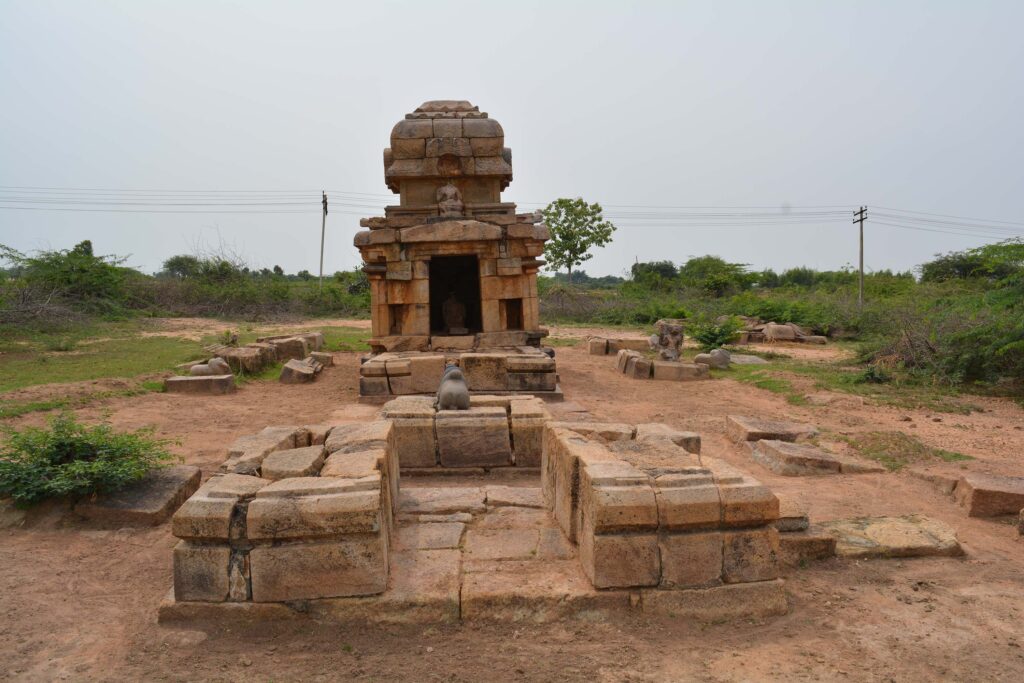
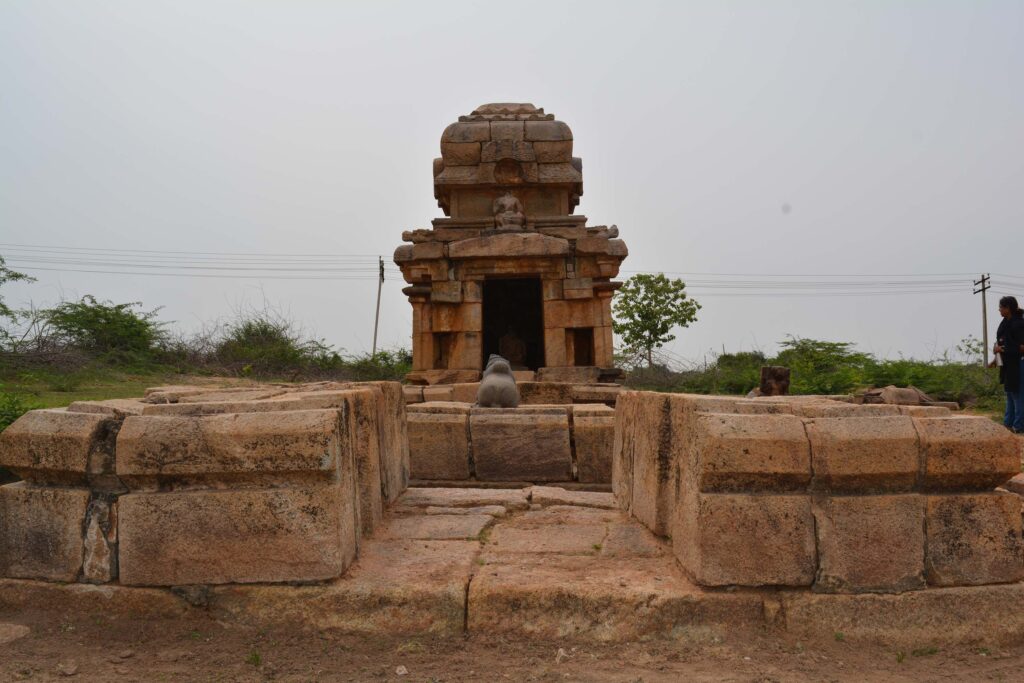
The kaliyapatti Siva temple complex is east facing and consists of a vimana, remnants of mukha-mandapa, parivara shrines and gopura. The small gopura has a remnant of adhishthana; upana, jagati, octagonal kumuda are the components leftover, rest of the structure is dilapidated. A small pathway is seen in the middle of the adhishthana.
The gopura leads to the prakara of the complex, a Nandi is seen seated on a pitha. Leftover base of three shrines are seen on the northern side of the prakara and as like, leftover base of two sub-shrines are seen on the western side of the prakara and lot of debris are seen around the temple.
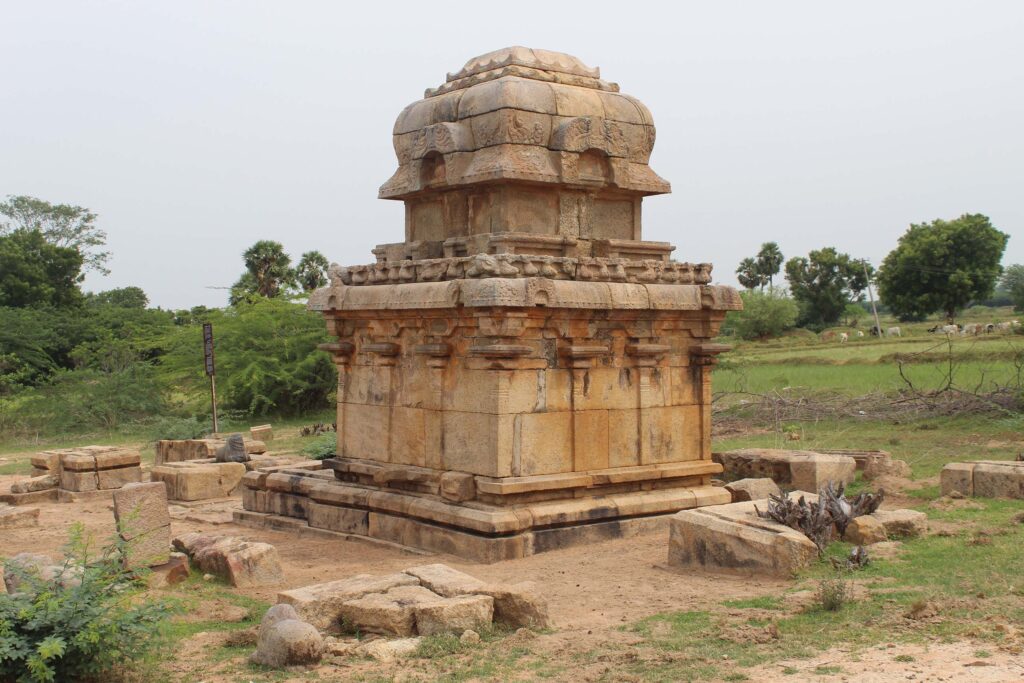
The vimana is ekatala pure nagara vimana; consists of adhishthana, bhitti, prastara, griva and sikhara. Adhishthana is padabandha type , bhitti of the vimana is segmented as karna, bhadra, karna demarcated by pilasters, however, segments are not projected. Karna segments are represented by a pilaster whereas the bhadra sections are represented with a pair of pilasters. The pilasters are brahmakantha type with capital components, the potikas resting above the pilasters are plain angular and bear the prastara. The roof of the tala extends on all sides as flexed overhanging kapota. The kapota is decked with kudu arches, konapattas and chandramandalas. However, valabhi is plain without bhutamala. The tala ends with bhumidesa. Above the bhumidesa is the vedika complex and above that rests the griva and sikhara. In the griva rectangular shaft is shown in the middle to represent the griva koshtha and crowned with maha kudu arches. Cardinal deities might have existed, however, at present seen only on the east. The nagara sikhara is decked with kodipalai in the corners and padma ornamentation in the apex. The finial stupi is missing.
The vimana is followed by a mukha-mandapa, the mukha mandapa also has a remnant of adhishthna with upana, jagati and octagonal kumudha and kampa of the gala complex, probably bhitti and prastara of the mukhamandapa is dilapidated.
Three sculptures are seen in the temple complex. A broken bas-relief sculpture is kept inside the sanctum, originally belongs to griva koshtha. The God is seated in suhasana on padma pitha, in silk attire, decked with ornaments like charapali, kankanas, keyura, makara kundalas, thazhseri. The back hands are in kartari mudra but objects are broken, the front right hand is in abhaya and the front left hand is resting on the thigh. Yajnopavita is worn in upavita fashion. Unable to identify the sculpture since the objects are broken and the head partially damaged. However, attributes of the sculpture place it to the period of vimana, in addition, also resembles the sculptures of Visalur.
Lord Dakshinamurthi is seen on the northern side, the God is seated in yogasana, back hands in kataka mudra carry akshamala, fire and the front hands are broken, however, right hand is in abhaya and the left hand is resting on thigh. In jatabhara, short attire and idaikattu the God is decked with ornaments like charapali, kankanas, keyura, kundalas. Yajnopavita is worn in upavita fashion. Two broken Nandi are seen scattered nearby, probably Nandis have placed on the roof of the tala at four corners.
A much worn out record of Parakesari Parantaka I is found in the adhishthana of the mukha-mandapa. The inscription mentions Visalur and some signatories.