Allur, a hamlet on the southern banks of the river Cauvery is twelve kilometers from the city Thiruchirappalli, lying en-route of Thiruchirappalli-Karur highways. The village is credited with two Chola temples named Pasupathiswara and Panchanadeswara, the former inside the village and the latter at the entry point of the village adjacent to the NH 81. Though Allur at present a single village, during Chola period it was two villages namely, Allur and Thiruvadakudi. The inscriptions at Pasupathiswara temple mention the deity and village as Allur and Allur Nakkarkoil Parameswara respectively whereas the inscriptions at Panchanadeswara temple mention Thiruvadakudi Mahadevar and Thiruvadakudi, a devadana neighbourhood of Allur. The former was administered by Ur while latter was by Sabha. Both the villages were under the administrative division of Uraiyur kurram and after reorganization of territories in the Middle Chola period, Uraiyur Kurram came under Keralanthaga valanadu.
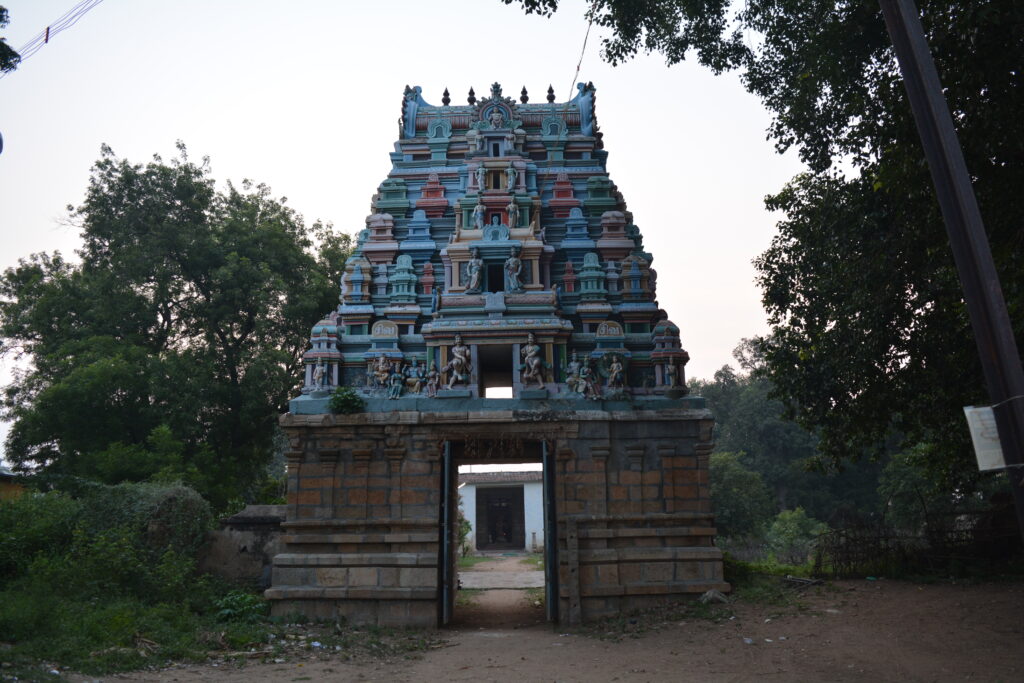
Thiruvadakudi Mahadevar or Panchanadeeswara temple is a two prakara complex with a gopura on the east. The gopura is a four tier structure raised on a upapitha; has padabandha adhishthana, bhitti cantoned by brahmakantha pilasters, prastara and the newly constructed super structure. In addition, the gopura is sectioned as karna-panjara-bhadra divisions in that the bhadra division is little projected. The pilasters possess capital components and the potikas are vettu-taranga and bear the prastara elements. The entire superstructure is newly constructed and crowned with sala sikhara. Brick wall extends both on the north and south encompassing the outer prakara, however, much dilapidated. The main gopura leads to the outer prakara, where the huge temple car is stationed in the north, a Pallava style animal base pillar is seen on the entrance to inner prakara.
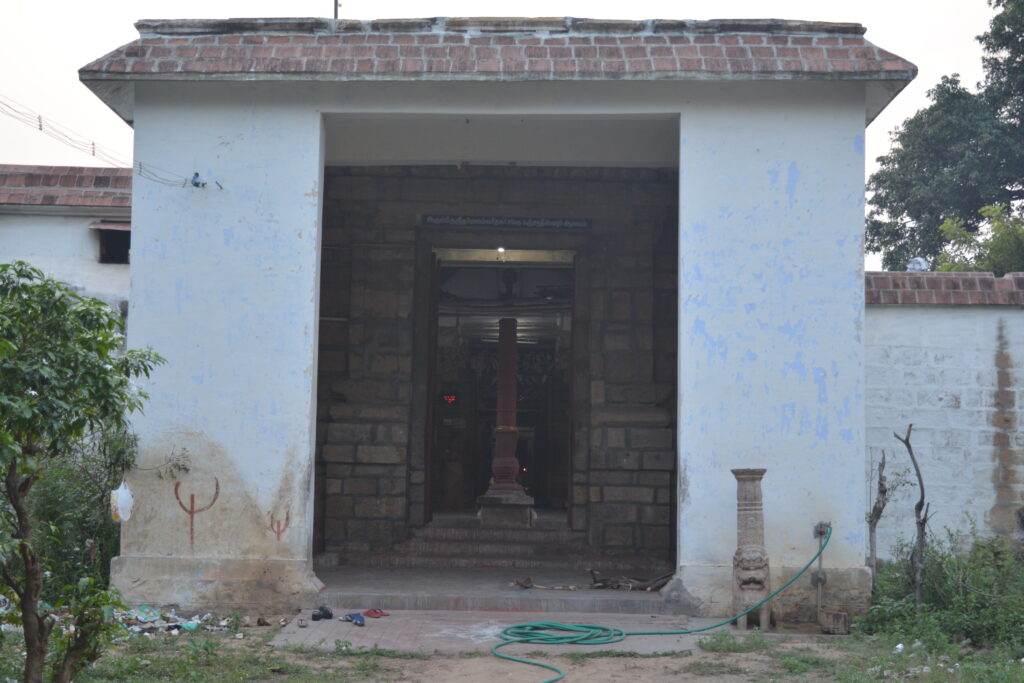
The second gopura that leads to the inner prakara is only with aditala without superstructure, raised on a tall upapitha and has a pratibandha adhishthana with the octagonal kumuda. The gopura is sectioned as karna-bhadra-karna divisions cantoned by brahmakantha pilasters and the bhadra is projected. The potikas that bear the prastara are angular and the valabhi is ornamented with padma series in the east whereas bhuta frieze is seen on the north and south. The door frames of the gopura are ornamented with padma series, the jambs have long base with nagabandha at the corners. Adjoining the gopura in its front a newly constructed brick structure is seen. The compound wall that extends on either side of the gopura encompasses the inner prakara.
The gopura leads to the inner prakara and in the center the main shrine lies. It consists of vimana, mukha mandapa, maha mandapa and an open pillared-mandapa. Balipitha, Nandi, and dwajasthamba are placed in the center of the open pillared mandapa orienting towards the sanctum. The thiruchurru on the eastern side is closed with brick walls and converted into madapalli in the south east and a small chamber on the north east. The thiruchurru on the western side has upapitha and a single row of pillars, shrines of Ganesa, Subramanya are seen here. The pillars are three squares and kattu, miniatures or medallions are seen in the squares, the potikas resting above the pillars are vettu and taranga, taranga ornamentation is shown in the base.
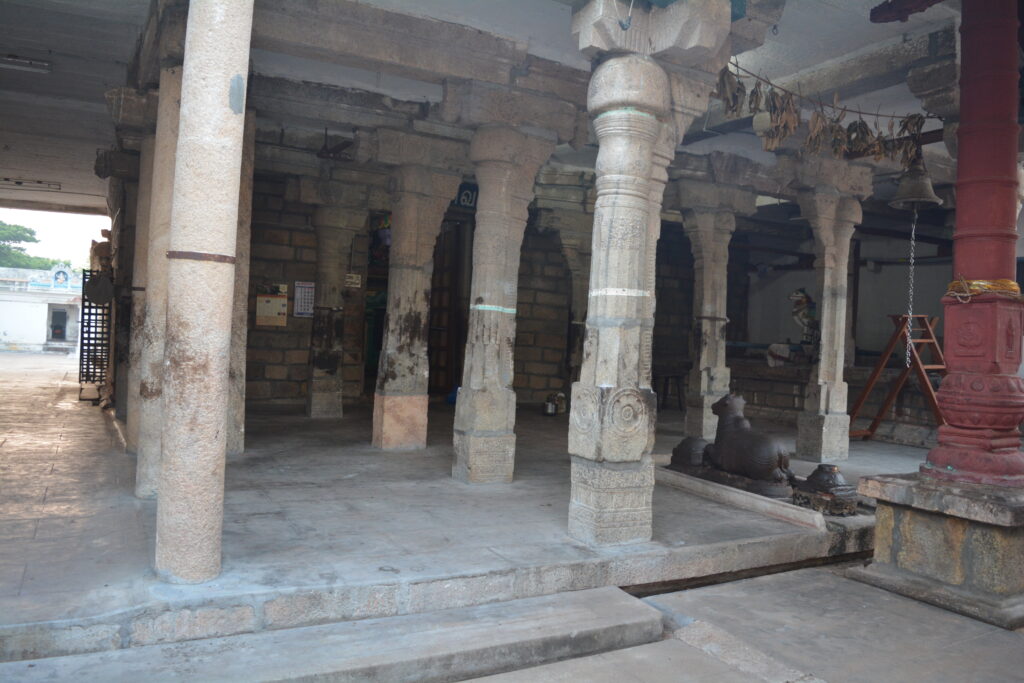
On the northern side of the mandapa, raised platform is seen where the vahanas are kept. The pillars in this mandapa are of various types viz; the second row of pillars from the south is plain rudra, the pillars on the northern side are multi ornamentation pillars, as like, the pillars in the middle row are ornamented as twin pillars. The middle two rows of pillars are resting on a square pedestal which is ornamented as upapitha. The multi ornamentation pillars have brahmakantha, vishnukantha, indrakantha and rudrakantha ornamentations consecutively; in addition, the head components are also shown in the rudrakantha section. In the twin pillars also, on one side the shaft is ornamented as multi ornamentation pillars whereas, the shaft on other side is ornamented as brahmakantha with capital components. The capital components in the brahmakantha pillars consist of kattu, kalasa, tadi, kumbha, pali and phalaka, whereas in the multi ornamentation pillars the latter two components are absent. In the brahmakantha shaft above the phalaka squatting lion or gana are shown and followed by padma ornamentation. The potikas are vettu with taranga in some of the pillars whereas the potikas above the twin pillars are maddala and spouted with bud in the tip. The potikas bear the uttira, followed by vajana and valabhi, the roof of the mandapa is covered with stone slabs. The presence of different types of pillars and potikas clearly shows renovation done to the mandapa in the later period.
The open pillared-mandapa leads to the outer maha mandapa a pillared hall where the goddess Darmasamvardhini shrine is seen on the northern side. The four huge pillars of this mandapa are ornamented as twin pillars with a part segmented as three squares and kattu in between and another part ornamented as brahmakantha pillar with head elements. In the squares, the corners are adorned with knob like ornamentation both upwards and downwards. The potikas are maddala and spouted with a bud in the tip. On either side of the Goddess shrine a chamber is seen.
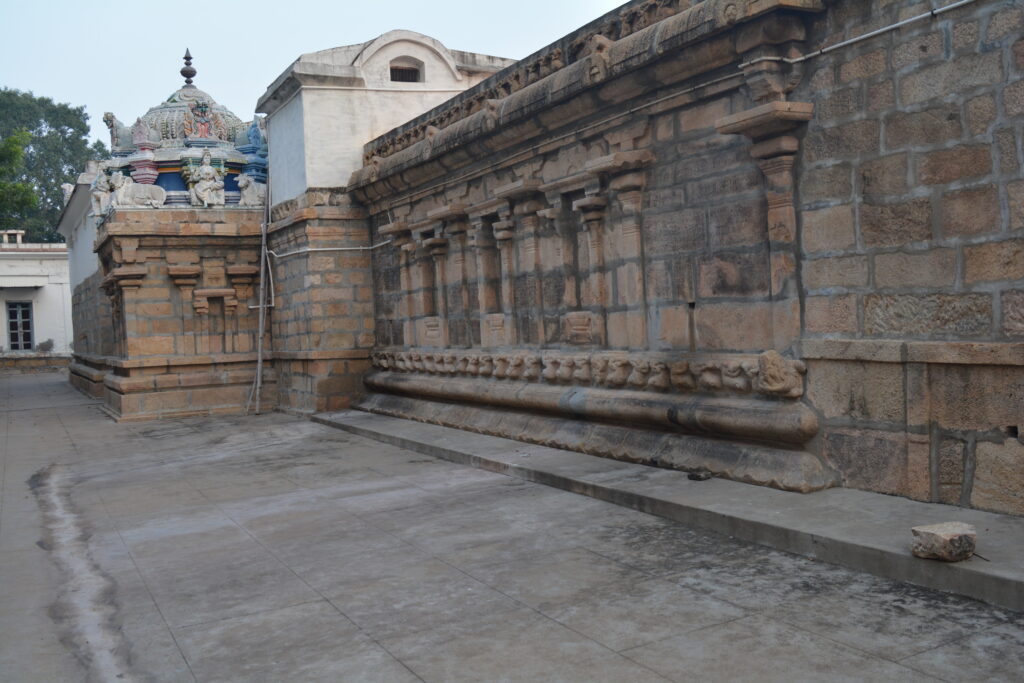
The Goddess shrine consists of vimana and mukha mandapa facing south. The ekatala misra vimana has nagara tala and vesara sikhara. The vimana has adhishthana, bhitti and prastara. The adhishthana is of padabandha type with jagati, octagonal kumuda, gala complex and pattika. The bhitti is cantoned by four brahmakantha pilasters on each side, the pilasters are ornamented with head components of kalasa, tadi, kumbha, pali, phalaka and virakantha. Koshthas are seen on the north, east and west in between the middle two pilasters. The potikas resting above the pilasters are tenon type, the potikas bear the prastara elements of uttira, vajana and valabhi. The valabhi is ornamented with padma series. Kudu ornamentations are shown corresponding to the pilasters and the tala ends with bhumidesa. The vimana is crowned with the newly constructed vesara sikhara. Nandi is shown placed at the corners. The mukha mandapa has a upapitha, plain bhitti and prastara. The goddess is standing in sama on a pedestal with her front hands in abhaya and varada whereas her back hands carry flowers. The goddess is clad in silk attire, decked with all usual ornaments and locks gathered as jatamakuta. An inscription of Rajakesari Sri Rajadhiraja deva found on the base of mandapa speaks about the offerings to the Pirattiyar.
Continue…