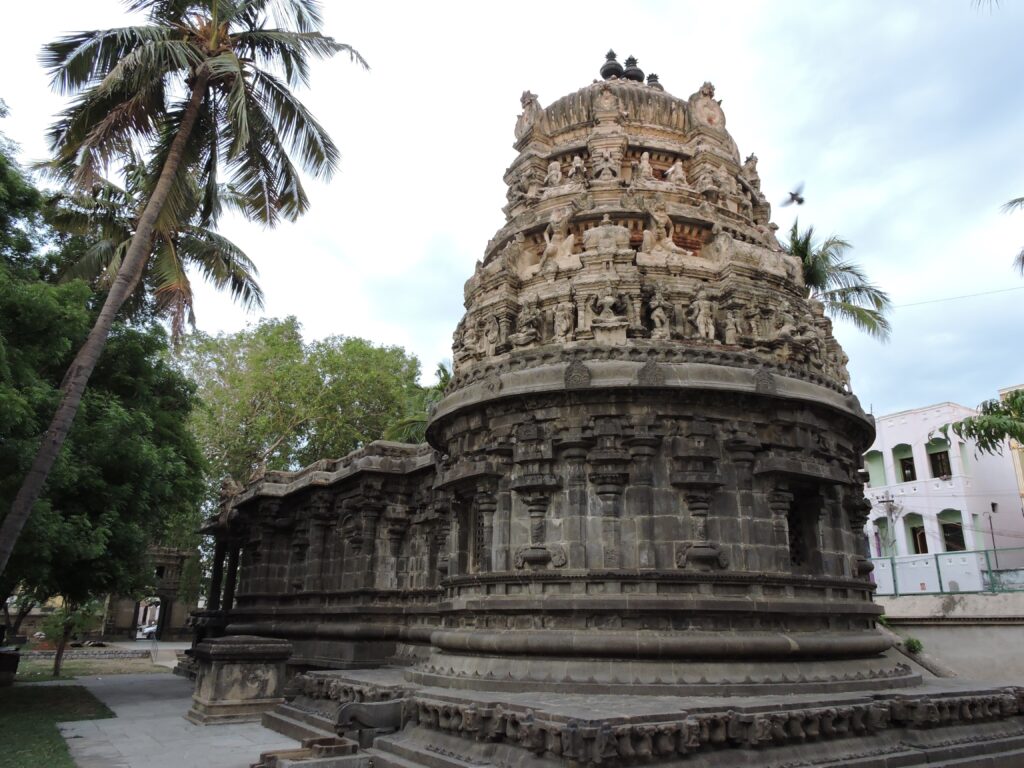
The main shrine of Jwarahareswara temple consists of vimana, mukha mandapa, a small mandapa, maha mandapa and porch. The vimana is raised on a large square plinth, ornamented as a upapitha. Further, it is also sectioned as bays and ledges on all side. In the prati series heavy pratimukhas are shown paired facing each other, the corners are adorned with makara heads; in addition, in the bays either a yazhi or an elephant in standing posture is shown. The uparikampa forms the surface of the upapitha. A long pranala is shown on the northern side of the upapitha at its surface level. The pranala is well spouted and has padma ornamentation in the edge. It is quite unusual to see a pranala in the upapitha.
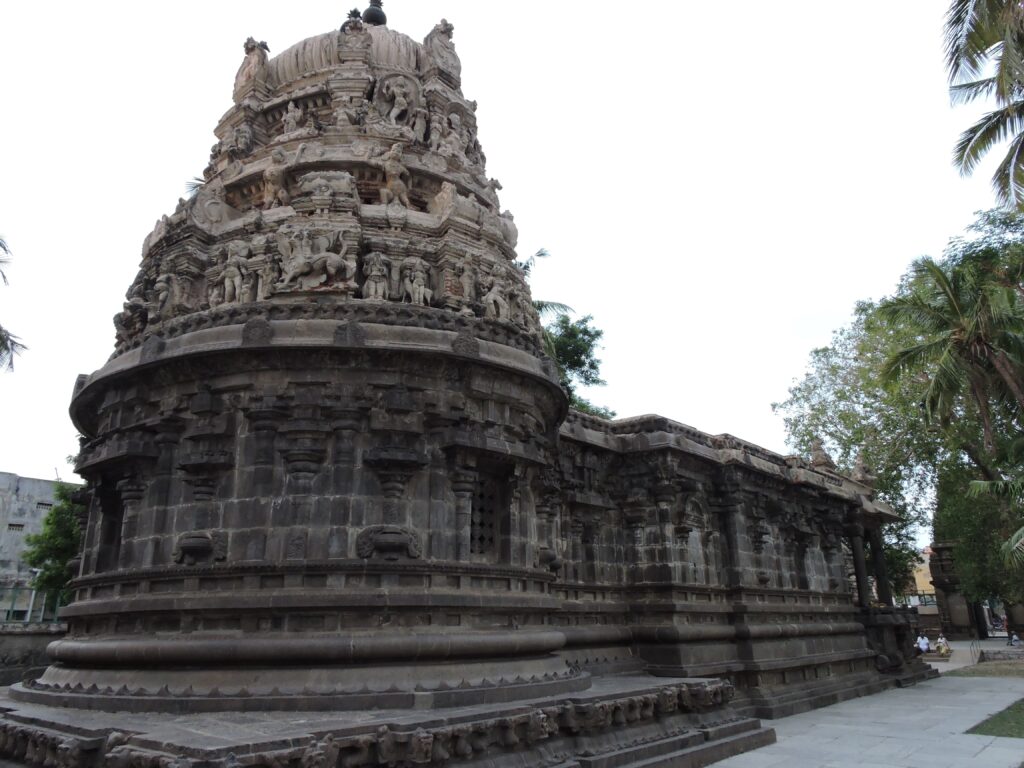
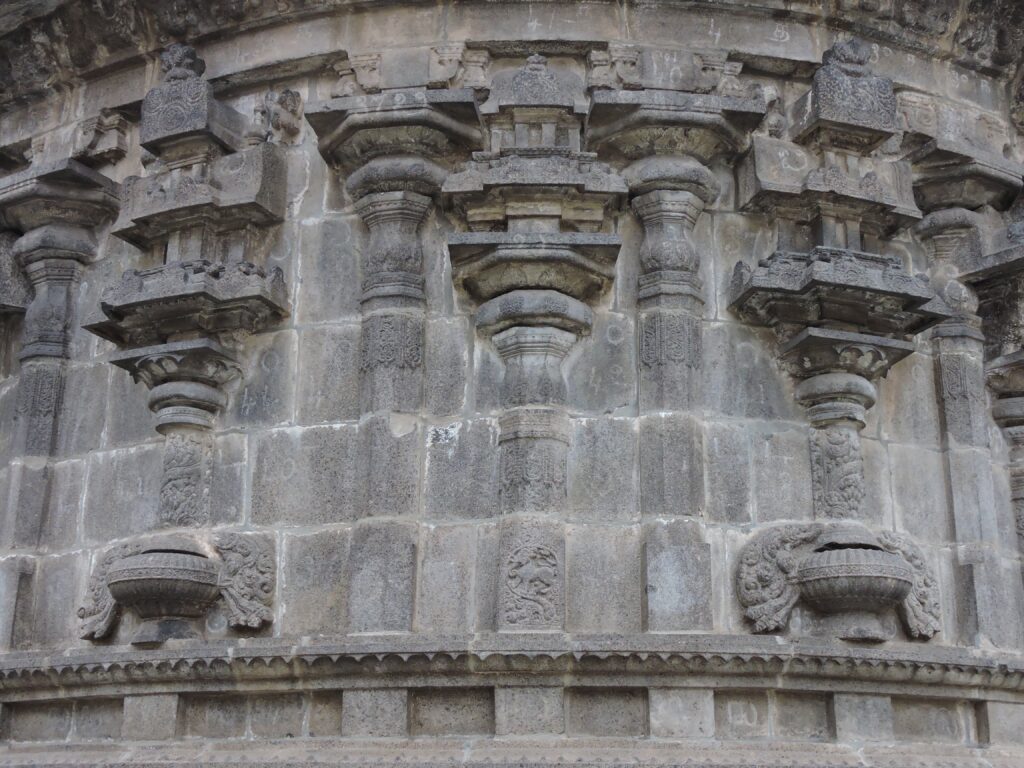
The ashtanga vimana of Jwarahareswara is elliptical in shape and has an adhishthana, bhitti, prastara; the adhishthana is padmabandha type. Padma embellishments are shown for the rudra kumuda. Above the adhishthana is the vedica complex. The bhitti that raise above the vedica complex is cantoned by vishnukantha pilasters, totally constituting fourteen in number. Karna and bhadra divisions are demarcated by pilaster representation. The karna and bhadra divisions are represented by a pair of pilasters, and the spaces in between the pilasters are adorned with stambha panjara and koshtha panjara respectively, whereas the spaces in between the karna and the bhadra segments are adorned with a kumbha panjara. Thus the vimana is exclusively a panjara adorned vimana in addition, assortment of panjaras are seen at one place.
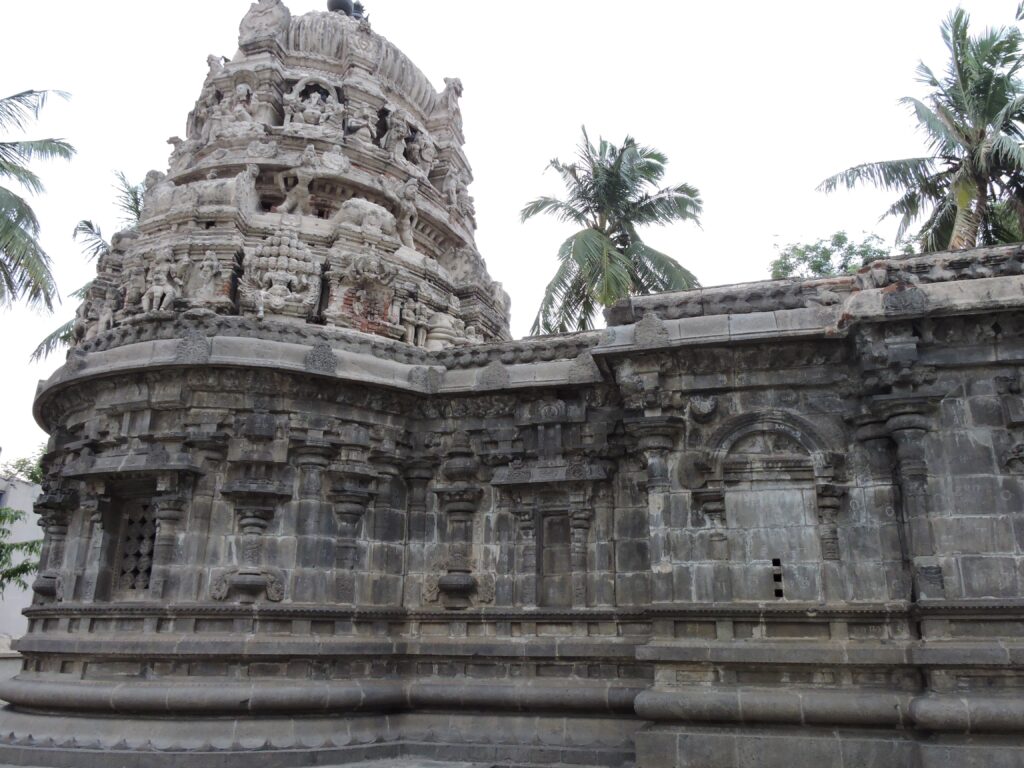
Vishnukantha shaft that raise above the oma is ornamented with all the usual head components, however, sthana is absent, instead the mala hang from the padmakattu. The mala ornamental with beaded garland with creeper inside, besides, each rim is adorned with beaded festoons. As like, kalasa is ornamented with leafy embossed work, tadi with padmavari and pali with folded edges.
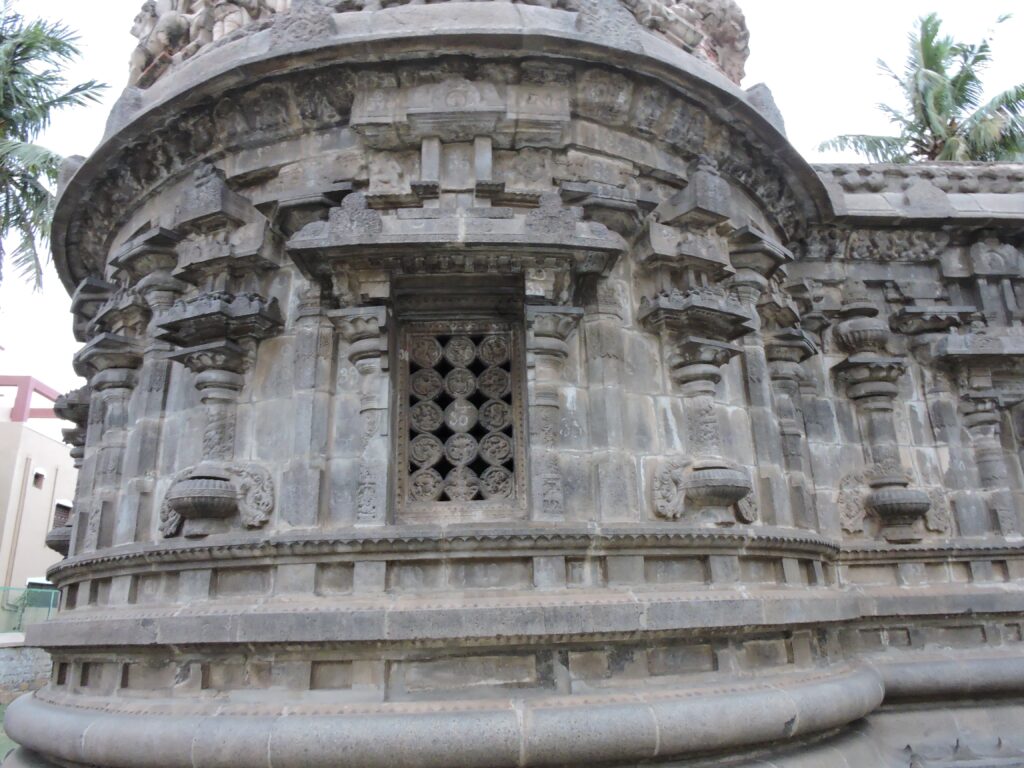
The potikas that rests above the pilasters are maddala and spouted with a small protrusion in the tip. The potikas bear the uttira, which is followed by vajana and valabhi, the valabhi is decked with bhuta frieze. The roof of the vimana extend as flexed over hanging kapota which is adorned with kudu arches at frequent intervals and chandramandalas at ridges. Some of the kudu arches are well formed but some are plain, shallow and the finial are not prominent. In some of the kudus gandharva heads or flower medallions are seen inside. The tala ends with bhumidesa, above the bhumidesa rests the superstructure of the vimana, fully a brick construction.
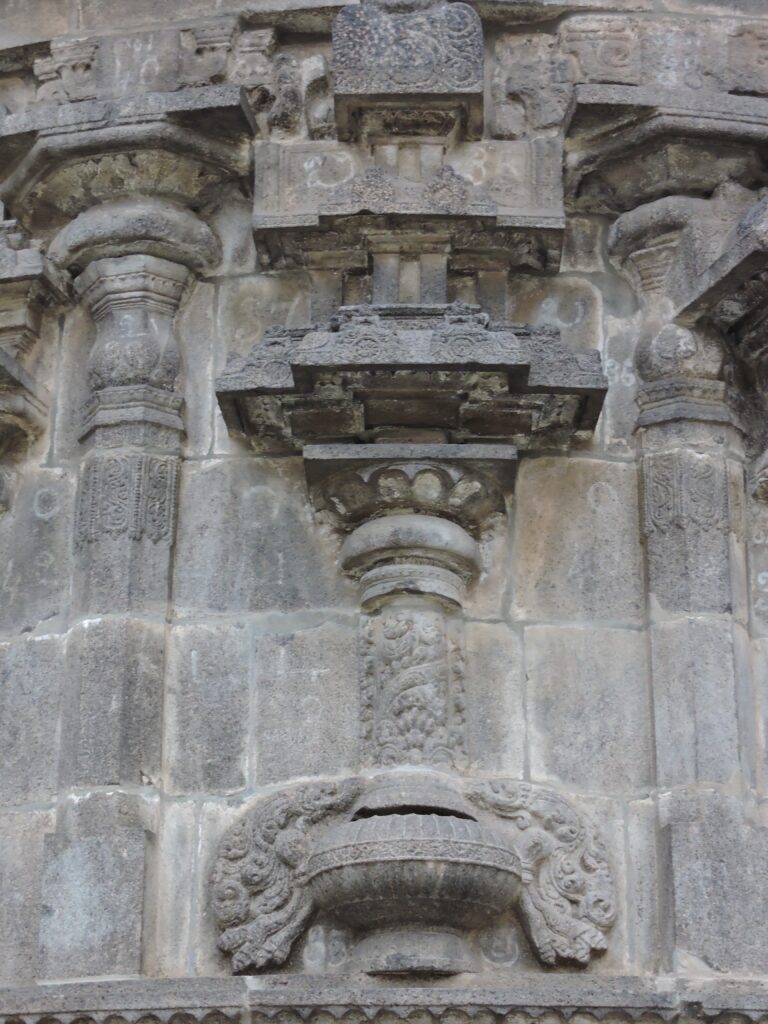
The three cardinal directions viz., west, north and south are decked with koshtha panjaras. Instead of cardinal deities, the back wall of the koshtha panjaras are embellished as perforated windows. Rombus perforation created circle faces which are adorned with miniatures. Koshtha panjaras with perforated windows and miniatures are quite interesting features in this vimana.
The superstructure of the vimana viz., hara of the aditala, second tala, griva and sikhara are entirely of brick and cement construction. The hara of aditala has bhadrasalas in the cardinal directions, karnakutas in the sub-cardinal directions, the hara elements are interconnected by the harantara. In addition, in between the hara elements a pair of kshudra nasikas are shown in the harantara. The koshtha panjaras in the cardinal directions are crowned with bhadrasalas, sthamba panjaras flanked by a pair of pilasters in the sub-cardinal directions are crowned with karnakutas and the kumbha panjaras in between the koshtha panjara and the sthamba panjara are crowned with kshudra nasikas. The nasikas both in the hara elements and the harantara are richly adorned with stucco figures. Brahma, Vishnu, Dakshinamurti and Siva adorn the bhadrasalas of north, west, south and east respectively. Various forms of Lord Siva viz., Gajasamharamurti, Bikshadana, Dakshinamurti, Bairava, Tripada, Ekapada, Sadasiva etc. and Brahma, Vishnu, Goddesses, Muruga, Ganesa are shown. In addition, puranic stories, erotic figures, damsels are also seen.
Being arpita hara, only the prastara is visible for the second tala; valabhi is decked with maddalas, kapota is ornamented with kudu arches. Bracket figures are shown bearing the second tala. Above the vedica complex rests the vesara grivā; the griva is adorned with griva koshthas. Brahma, Vishnu, Dakshinamurti, Siva are housed in the north, west, south, and east koshthas respectively. Nasikas are shown in between, personified nandi seated in anjali hasta are housed in. Rishis and deities either in seated or standing posture are shown in between. Besides, on the roof of the second tala nandis are shown seated at frequent intervals. The sikhara is elliptical in shape and the body of the sikhara is ornamented as ribs, lotus ornamentation in the apex. Three stupis atop forms the finial of the vimana.