Andhavanallur, at present known as Andanallur is a small hamlet lies on the southern banks of the river Cauvery and about 14 kms from the city Thiruchirappalli. The village lies enroute of Tiruchirappali-Karur route in the NH 81. The village is renowned for its Chola temple dedicated to Lord Siva in the name Thiruvalanthurai Mahadevar, but at present the deity is known as Vada Thirthanathar. The temple lies at the entry point of the village to the south of the highways that runs parallel to the river Cauvery. It is striking to note that few of the neighbouring villages on the same stretch have temples at its entry point viz., Thiruchchendurai, Allur, Thirupparaithurai, Pazhuvur. A few kilometers inside lies Perungudi, Pulivalam, Mullikarumbur, Maruthandakuruchi, Kulumani, Nangavaram, Some of these temples were constructed by the Irukkuvels, the feudatories of the Cholas and remained under the flourishing patronage of the Cholas and the Velirs.
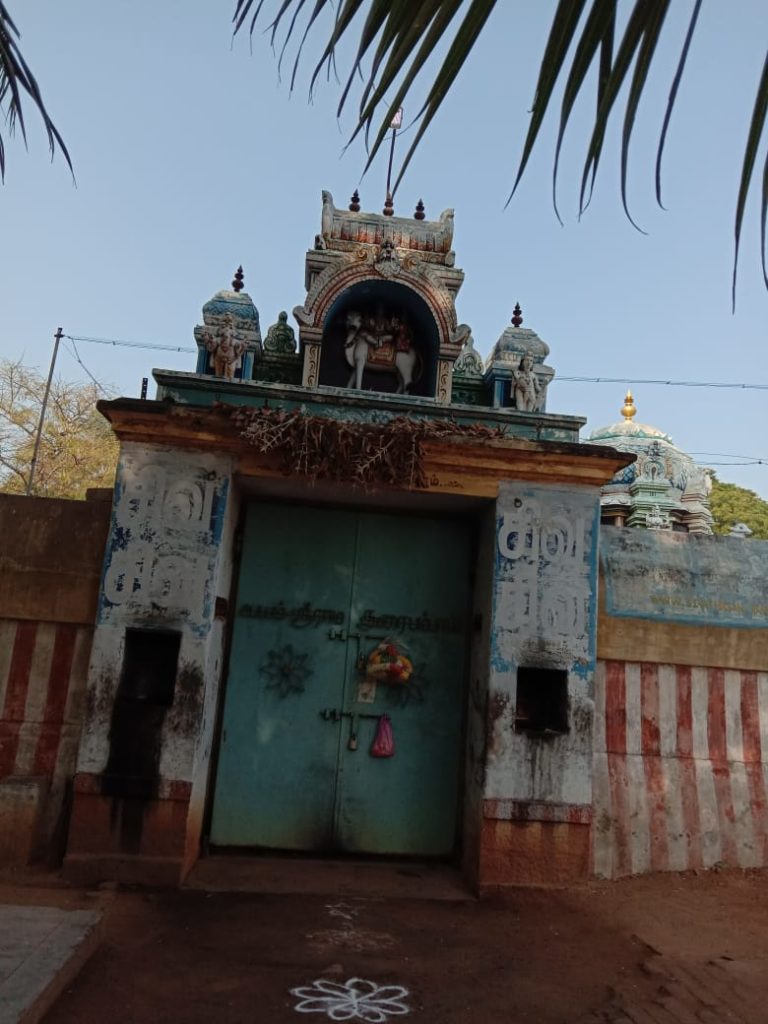
THE TEMPLE COMPLEX
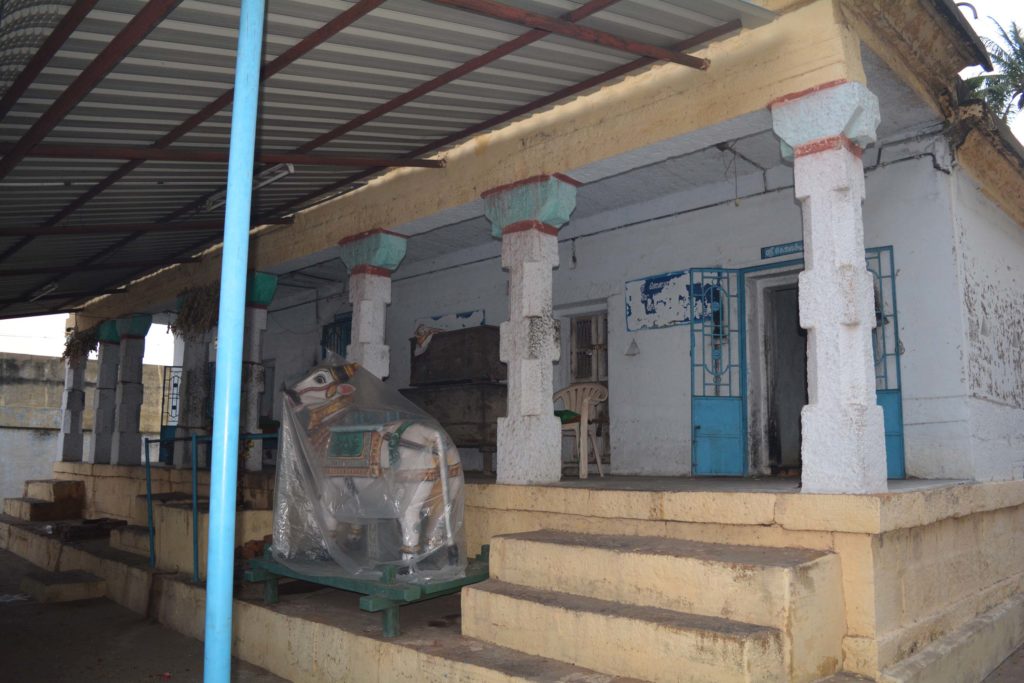
The Thiruvalanthurai Mahadevar temple complex is a two prakara complex with main entrance on the north. The outer prakara is simply a open space with plants and trees and has a long stretch of compound wall running parallel to the NH 81 with entrance on the north, but lacks compound walls on the south and east. The inner prakara has the entrance on the east with the main shrine lying in the centre and sub-shrines of Ganesa, Subrahmania and Gajalakshmi on the western side of the prakara. On the eastern side of the prakara Navagraha, Surya, Chandra, Bairava are kept inside on a platform inside a closed provision. The main shrine consists of vimana, mukha mandapa, maha mandapa and open pillared mandapa facing east. The goddess shrine is on the northern side of the prakara facing south. The open pillared mandapa adjoins the maha mandapa and the goddess shrine. In the centre of the prakara balitala and Nandi mandapa are seen oriented towards the presiding deity.
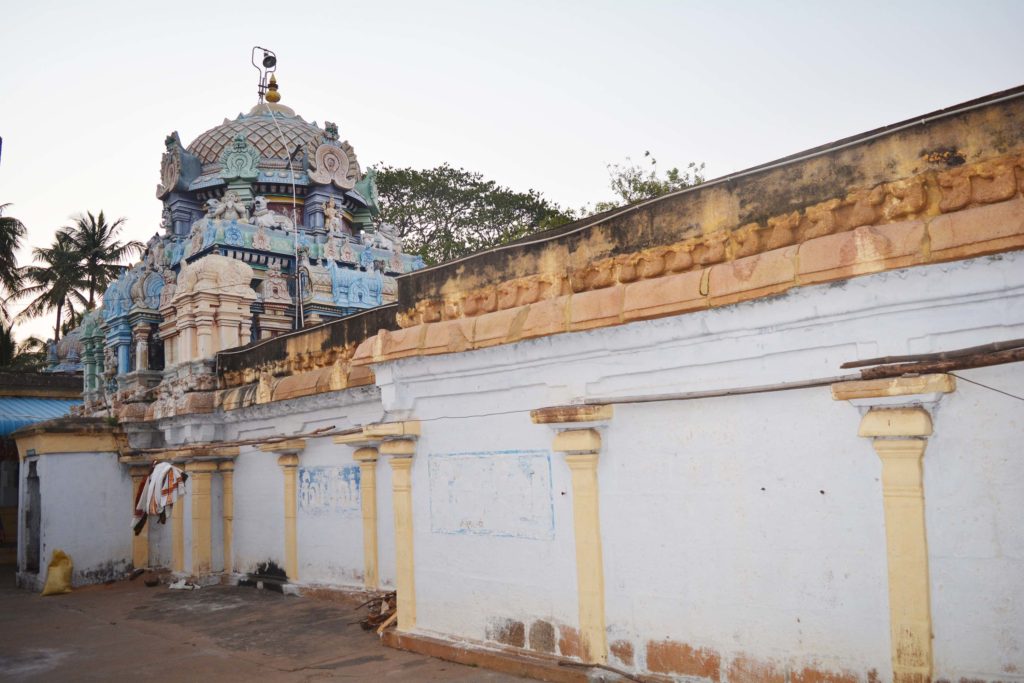
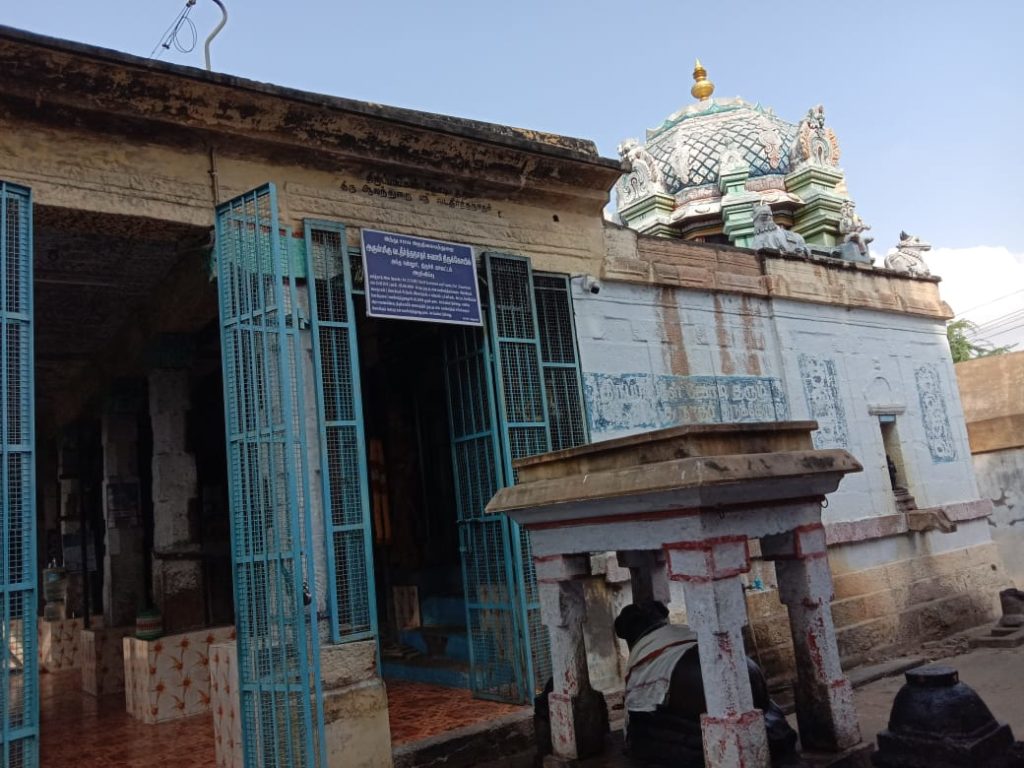
THE VIMANA
The vimana is a dvitala misra vimana with nagara talas and vesara sikhara. The vimana has an adhishthana, bhitti, prastara, forming the aditala and above the aditala raise the second tala. The aditala is also crowned with the hara structure. Above the second tala rests the vesara griva and sikhara. The entire super structure of the vimana is of modern origin. But it also brings to forefront that it might be of refurbishment over the original super structure.
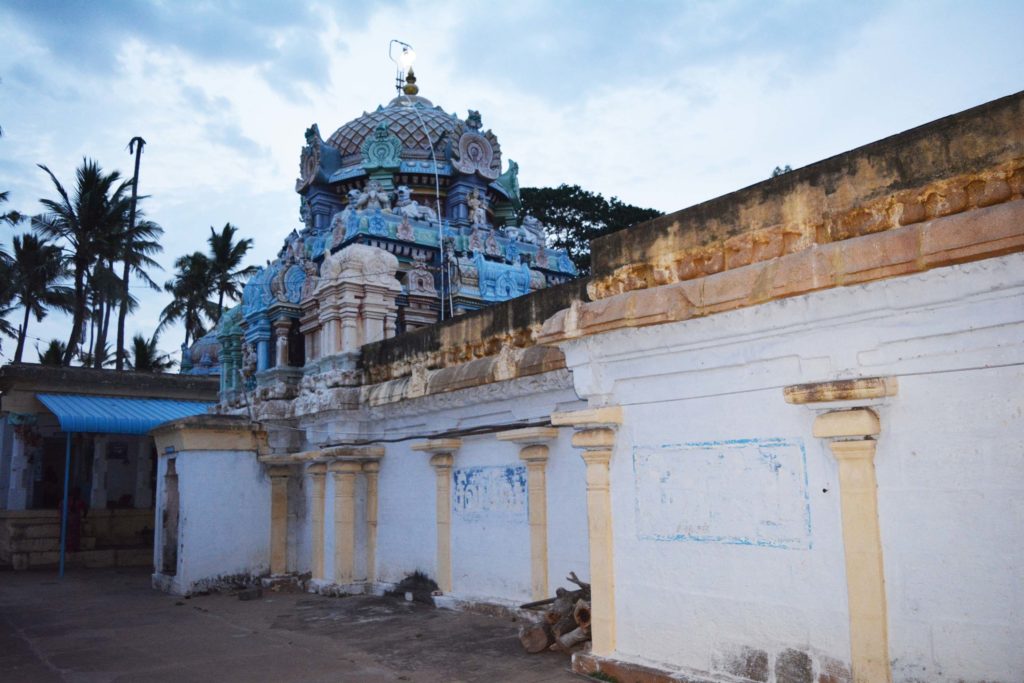
The aditala of the vimana is sectioned as karna, bhadra and karna divisions. All the three sections viz., karna-bhadra-karna are projected and forming a recession in between the karna and bhadra sections. In addition, the bhadra is more projected than the karna divisions. The adhishthana is concealed upto the gala complex level due to the newly paved flooring. On the southern side only pattika is visible but on the northern side both the gala complex and pattika are visible. Besides, the upper portion of the kumuda is also partially visible. The visible parts of the adhishthana suggest that the adhishthana is of padabandha type with octagonal kumuda. Above the pattika of the adhishthana runs a thin kampa.
The bhitti that raise above the thin kampa is cantoned by six pilasters on all the sides, both the karna and bhadra sections are cantoned by a pair of pilasters. The pilasters are brahmakantha type with capital ornamentations. The upper ornamentations are mala, sthana, kattu, kalasa, tadi, kumbha, pali and phalaka and virakantha. The mala is formed only in some of the pilasters. Due to colour wash to the walls of the temple the ornamentation in the mala, sthana and the inscriptions are not clear.
Above the pilasters rests the potikas that are angular, taranga, with kulavu in the angular portion. Besides, the potikas are also ornamented with median patta and inscribed with scrolls. The limbs of the potikas extend to bear the uttira. Above the uttira is seen the vajana. The valabhi that follows the vajana is decked with bhuta frieze. The roof of the tala extends as flexed over hanging kapota, it extends according to the recession and projection of the tala. The kapota is decked with kudu arches in correspondence to the pilasters in the karna and bhadra sections. Besides, the kapota is ornamented with kodikarukku in the corners and chandramandalas in the edges.
The bhadras in the west, north and south are decked with koshthas. The koshthas are flanked by brahmakantha split pilasters. The pilasters of koshthas possess the same features of the pilasters of vimana. The koshthas are crowned with makara thoranas. Dakshinamurthi, Mahalinga housed in the koshthas of south and west respectively, whereas the northern koshtha is empty. A long curvy spout like pranala is seen on the northern side of the vimana.

The bhumidesa is represented with yazhi frieze and the corners are adorned with makara heads. Above the bhumidesa runs the vedika complex, on which rests the hara of the aditala. The hara, second tala, griva and sikhara are fully refurbished with cement plastering. Nevertheless, the refurbished structure carries all the elements of the original structure.
The arpita hara has karnakutas in the corners and bhadra sala in the middle forming the hara elements. Besides, in between the karnakuta and bhadrasala is the panjara. The hara elements viz., karnakuta-panjara-bhadrasala-panjara-karnakutas are interconnected by the harantara. Deities of cardinal direction housed in the nasikas of bhadra salas whereas the nasikas of the karnakutas are plain.
Due to arpita hara, the harmaya of the second tala is visible only in the upper level. The prastara elements of uttira, vajana, valabhi and kapota are seen. The valabhi is ornamented with maddalas. The kapota is ornamented with kudu arches at frequent intervals, in correspondence to the pilasters of the second tala. Above the roof of the second tala runs the plain bhumidesa and at the four corners a pair of nandis are seen, a gana is seen in between the nandis.
Above the bhumidesa is the vedika complex on which rests the griva. The vesara griva is plain decked with koshthas at the cardinal directions and nasikas in the sub-cardinal directions. The koshthas are adorned by deities of cardinal direction, viz., Brahma on the north, Vishnu in the west and Dakshinamurti on the south and Indra on the east. Besides, the griva also possess prastara elements of uttira, vajana, valabhi and the kapota. The valabhi is decked with maddalas and the prastara elements are ornamented with painting. The vesara sikhara is ornamented with diagonal patterns. The finial elements for the koshthas and nasikas viz. the makara toranas are shown on the body of the sikhara. The metal stupi forms the finial of the vimana.
THE MUKHA MANDAPA
As like the vimana, the mukha mandapa has padabandha adhishthana, bhitti and prastara and the bhitti is cantoned by four brahmakantha pilasters. The pilasters possess the same features of the pilasters of the vimana. The potikas that rest above the pilasters are angular-taranga with median patta and kulavu. The potikas bear the uttira and is followed by vajana, valabhi and kapota. As like the vimana the valabhi is decked with bhuta frieze. The kudu arches four at each side ornament the kapota, besides the chandramandalas adorn the ridges. Above the roof is the bhumidesa represented with yazhi frieze. The roof of the mukha mandapa is refurbished with cement plastering.
THE MAHA MANDAPA
The maha mandapa is a pillared hall has a basement, bhitti and prastara. As the basement is concealed by the paved floor, it is difficult to find whether it has an adhishthana or a upapitha. The bhitti is segmented by five pilasters at frequent intervals. The pilasters are brahmakantha type with head components. The potikas are angular and taranga, but the potikas that rest above the first pilaster adjoining the vimana both on the north and south are vettu and taranga. The potikas bear the uttira, followed by vajana and valabhi. The valabhi is ornamented with padma series. The kapota is decked with kudu arches, at some places kudus remain unfinished. Above the kapota is the bhumi desa represented with yazhi frieze. The roof of the mandapa is overhauled with cement plastering.
THE OPEN PILLARED MANDAPA
In front of the maha mandapa is the open pillared mandapa. It has three rows of four pillars each, the pillars are tall with three squares and two kattu in between. The potikas that rest above the pillars are vettu potikas and bear the cross running uttira. The roof of the mandapa is paved with stone slabs. On the northern side of the mandapa is the office of the temple and the shrine for goddess is seen. The twin fish Pandya symbol is seen on the roof of the mandapa. The mandapa is covered with iron gates making it a closed provision with entrance on the east and in the south. Besides, the floor of the mandapa is paved with tiles.
INSIDE
Inside the maha mandapa is a pillared hall. It has two rows of four pillars each. The pillars are of varied type, rudrakantha pillars and square-kattu pillars are seen. But the potikas above the pillars are vettu and taranga. The pillars bear the cross running uttira and the roof of the mandapa is covered with stone slabs. The flooring of the mandapa on both the sides are raised with a pathway in the middle. A small nandi is placed facing the God.
The maha mandapa leads to the mukha mandapa, a pillared hall. The doorway of the mukha mandapa is flanked by brahmakantha split pilasters. The angular-taranga-kulavu potikas that rest above the pilasters bear the uttira, followed by vajana and valabhi. The bhuta frieze seen on the outer side also continues in the inner side with interesting series of ganas. On either side of the entrance is the niches adorned with dvarapalas. The jambs of the doorway are ornamented with scrolls and the lintel is shown as kantha and pada ornamentation.
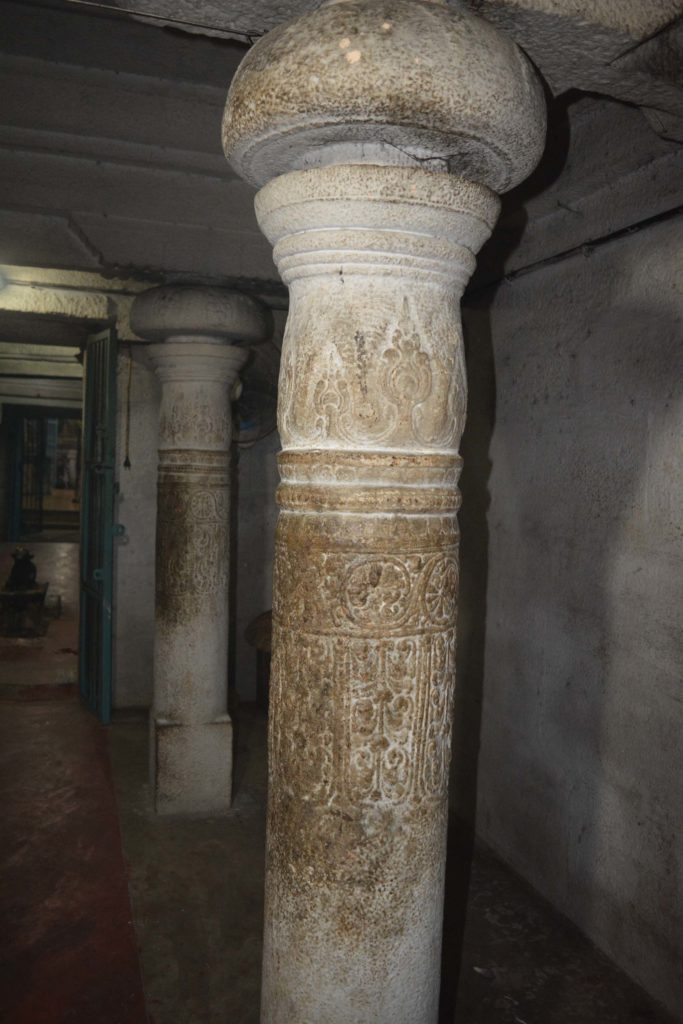
Inside the mukha mandapa has two rows of pillars and pilasters, sectioning the mandapa into three divisions. Each row possesses two pillars in the middle and two pilasters on either side on the walls. The pillars and pilasters are ornamental rudra pillars, raise on a oma and the rudra shaft is ornamented with capital components. It is interesting to note that pali and phalaka are absent. The potikas that rests above the pillars are angular, taranga with kuzhavu. Instead of median patta, the middle section of the potika extends like a beam and connects with the middle section of the opposite potika. Some of the potikas remain unfinished. The potikas bear the uttira followed by vajana and plain valabhi. The roof of the mandapa is covered with stone slabs.
The mukha mandapa leads to the sanctum. The entrance of the sanctum is flanked by pilasters that carry the usual features as found in the outer side of the vimana. The door way of the sanctum has jambs and lintel. The jambs are ornamented with scrolls and the lintel is ornamented as kantha and pada segments. The sanctum is a cubical chamber with plain walls, uttira and vajana are the prastara elements seen. Lord Shiva in the form of Linga housed in. The avudaiyar is circular with rudra bana and a small gomukha on the north.
THE GODDESS SHRINE
The goddess shrine has a vimana and mukha mandapa facing north. The vimana has a basement but lack the proper features of an adhishthana, above the basement raise the bhitti sectioned by four plain brahmakantha pilasters on each side. The potikas of the pilasters are vettu and taranga. The potikas bear the uttira, vajana and plain valabhi. The kapota is flexed and over hanging and decked with kudu arches. The vimana is crowned with dravida sikhara. Koshthas are shown between the middle two pilaster on the east, west and north. The koshthas are flanked by split pilasters and crowned with a thorana.
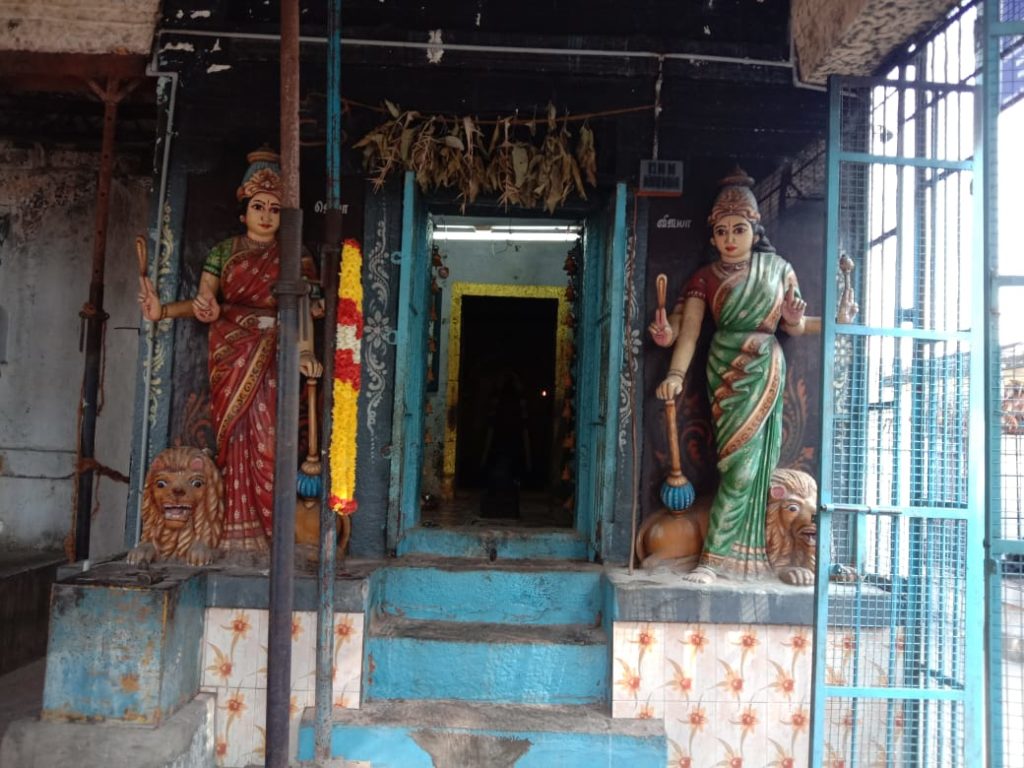
The mukha mandapa carry the same features of the vimana viz., a basement, bhitti sectioned by pilasters and prastara. On the southern side the entrance of the mukha mandapa is guarded by the dvarapalikas. Inside the mukha mandapa is a pillared hall with a pair of segmented as three squares and kattu in between. The potikas are vettu and taranga. The potikas bear the uttira that bear the roof of the mandapa. The sanctum is a cubical chamber housed the goddess in standing posture. The Goddess is standing in sama on a pitha carrying flowers in both the hands, in karanta makuta and long attire decked with all usual ornaments.
THE CHANDESWARA SHRINE
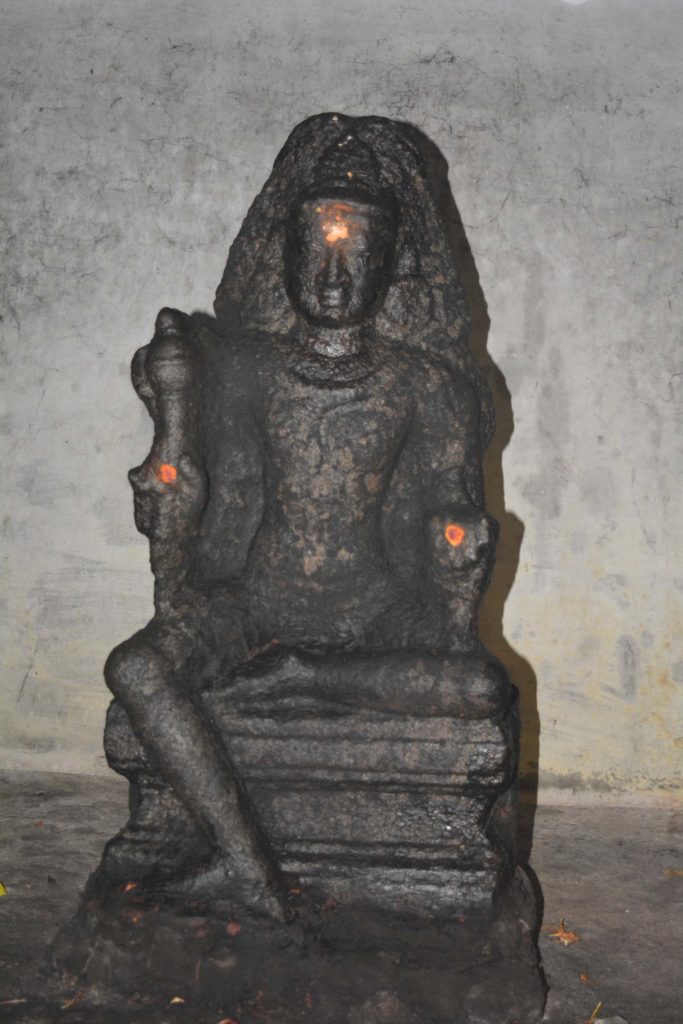
The Chandeswara shrine is on the northern side of the parakara is facing south. The shrine has a upapitha, bhitti and prastara, the bhitti lack pilasters. The roof of the shrine is covered with cement plastering. Chandeswara is seated on a pitha in suhasana, both his hands are in kat̩aka, while his left hand positioned above his left leg, his right hand is folded up and holding the axe. The locks are arranged as jatabhara and decked with ornaments like beaded neck oranament, patrakundalas, keyura and kankanas. He is draped in short attire and the yajnopavita is worn in upavita fashion. Ornaments, attire and features of Chandeswara place him before fifteen century C.E.
SCULPTURES
DVARAPALAS
Both the dvarapalas are masterpiece and carry the traits of middle Chola period. They are standing on the pitha in dvibanga posture with their lower body twisted towards sanctum and the upper body facing straight. The dvarapala in the north has placed his right leg on the pedestal in parsva and the left leg is lifted up and placed on the machete of the cylindrical plank held by him to his right, whereas his counterpart placed his left leg on the pedestal in parsva and the right leg is lifted up and placed on the tree branch held by him on his left. The dvarapalas have positioned their one hand in mudra and the other hand on the plank; the right hand of the northern dvarapala is in vismaya and the left hand is holding the cylindrical plank placed to his right. His counterpart is holding the tree branch on his left hand and the right hand usually in darjani mudra is unfortunately got mutilated.
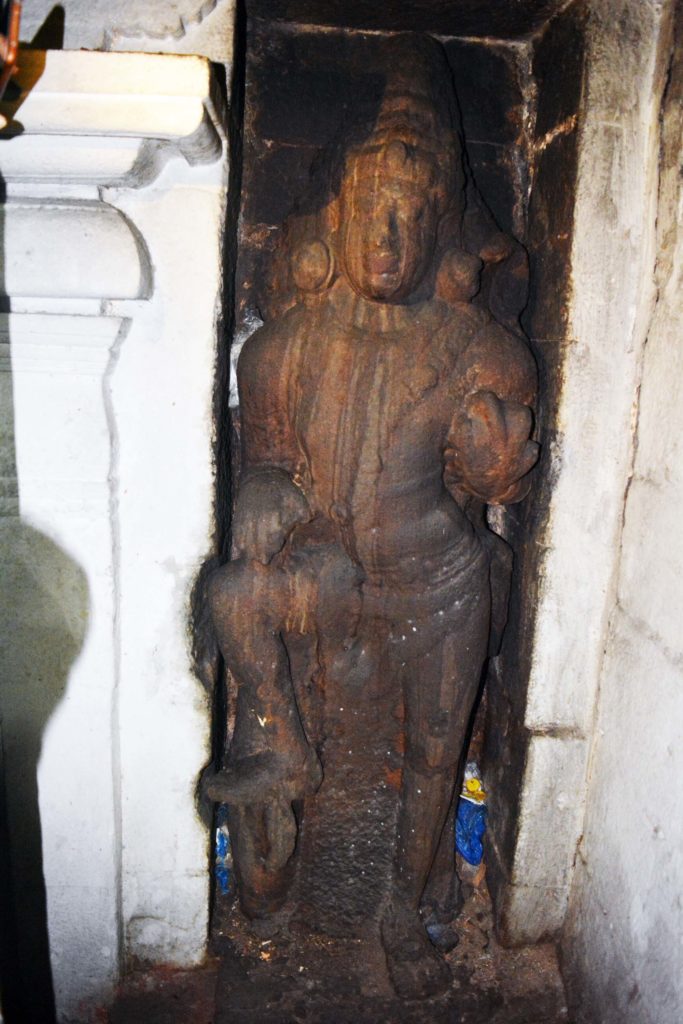
For both the dvarapalas the attire and ornaments are similar. Both are lavishly decked with stone and pearl studded ornaments. Locks are formed as braids, a tuft is matted as jatamakuta in the apex and a portion of braids in the lower head are beautifully curled and left untied spreading behind. The makuta is ornamented with pearl strings that hang throughout and head patta adorns the fore head. Ears are elongated and adorned with owl kundalas. A heavy stone and pearl studded neck ornament is adorned by them, in addition, pearls strings also dangle in the neck ornament. The arms are adorned with bangles in the wrists, simhamukha armlets in the upper hand. Pearl strings also hang in the armlets. Yajnopavita is worn in upavita fashion, it has four different stings and the brahmasutra is shown as flower brooches. Both are adorned with udarabandha which possess brooch and pearl strings. Their lower garment is a short attire (marauri aadai) fastened by stone studded hip belt, excess noose of the hip belt dangle in the front. Idaikattu is slackly worn above the lower garment, the tussles of the knot hangs on sides. Both the dvarapalas are adorned with anklets in addition the northern dvarapala is also adorned with anklet in the calf.
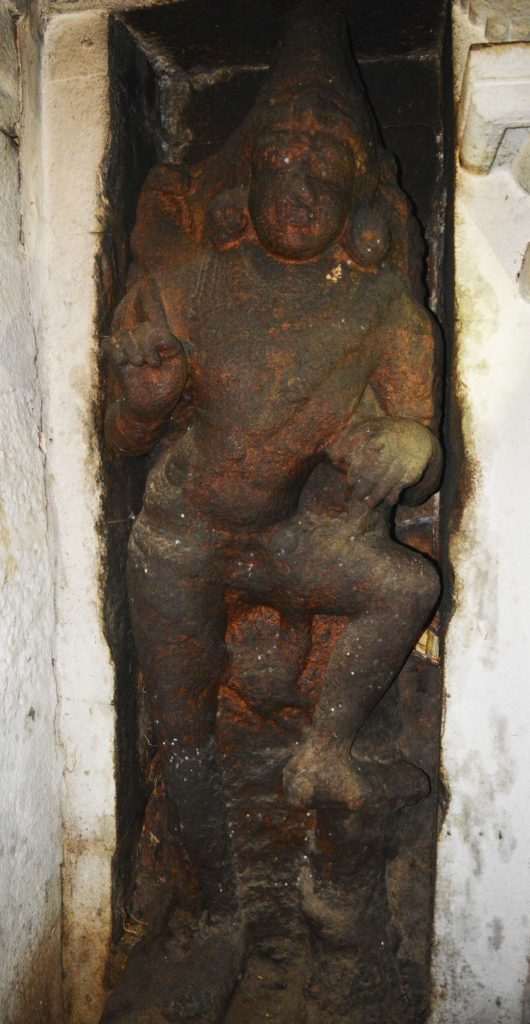
A snake is seen with its raised hood behind the left shoulder of the northern dvarapala whereas for the southern dvarapala it is on the right shoulder. The dvarapala in the north is holding a plank which has heavy cylindrical body with a trimmed handle and pointed tip. The tree branch held by the southern dvarapala is also a heavy twig. Two holes are seen on the branch; one in the lower part of the twig and the other in the upper part. A snake is seen emerging out of the lower hole and chasing a rat that runs furiously. Besides, a reptile is also seen climbing the branch.
BAIRAVA
Bhairava is standing on a pedestal in sama in nude posture with a dog behind. His locks are arranged as sudarmudi, raised up like flames that form a triangular shape and decked with head patta. The vastara yajnopavita is worn in upavita fashion and while a portion of the vastra extend upto his calf. All the palms are in kataka mudra and also carry objects; among the right hands the front hand carry sula and the back hand carry damru, among the left hands, the front hand carry kapala and the back hand carry snake. Kandigai, Chavadi and charapali adorn his neck, anklets are worn in the ankle, the ears are elongated and decked with patrakundala in the left and makara kundala in the right. Bangles, armlets and shoulder ornament are adorned in the arms. A snake entwines the lower body of the deity. Tusks and wide open eyes exhibit the fierce nature of the god.
The dog standing behind the god is with its ears erupt, mouth wide open exposing the canines and tail scroll in erupt posture. The dog is also decked with beaded ornament in the back and the neck.
BHUTA FRIEZE
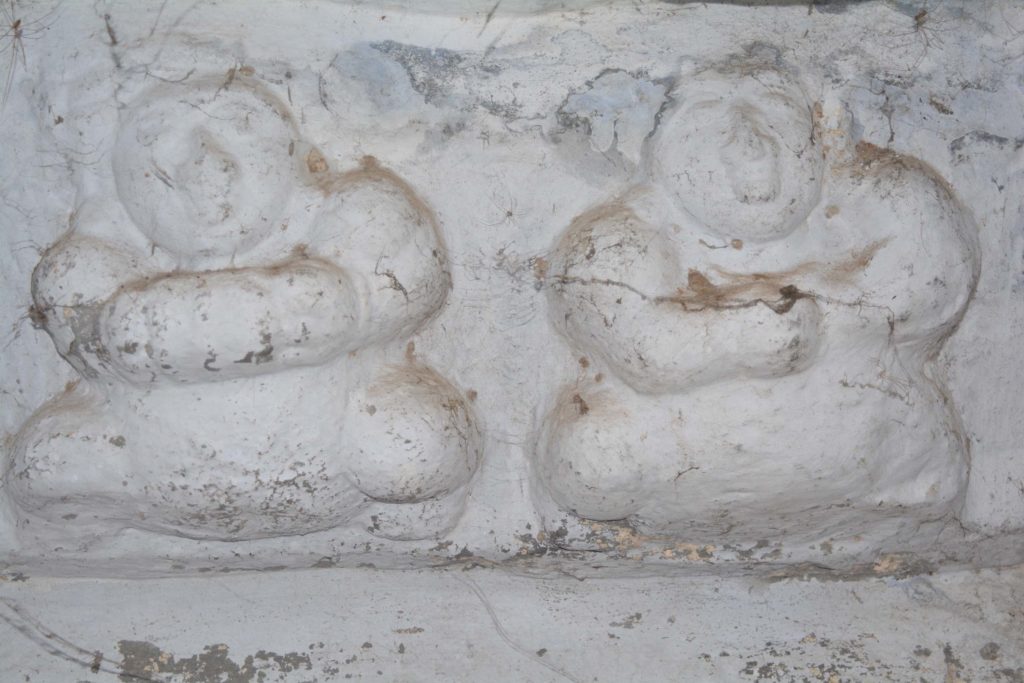
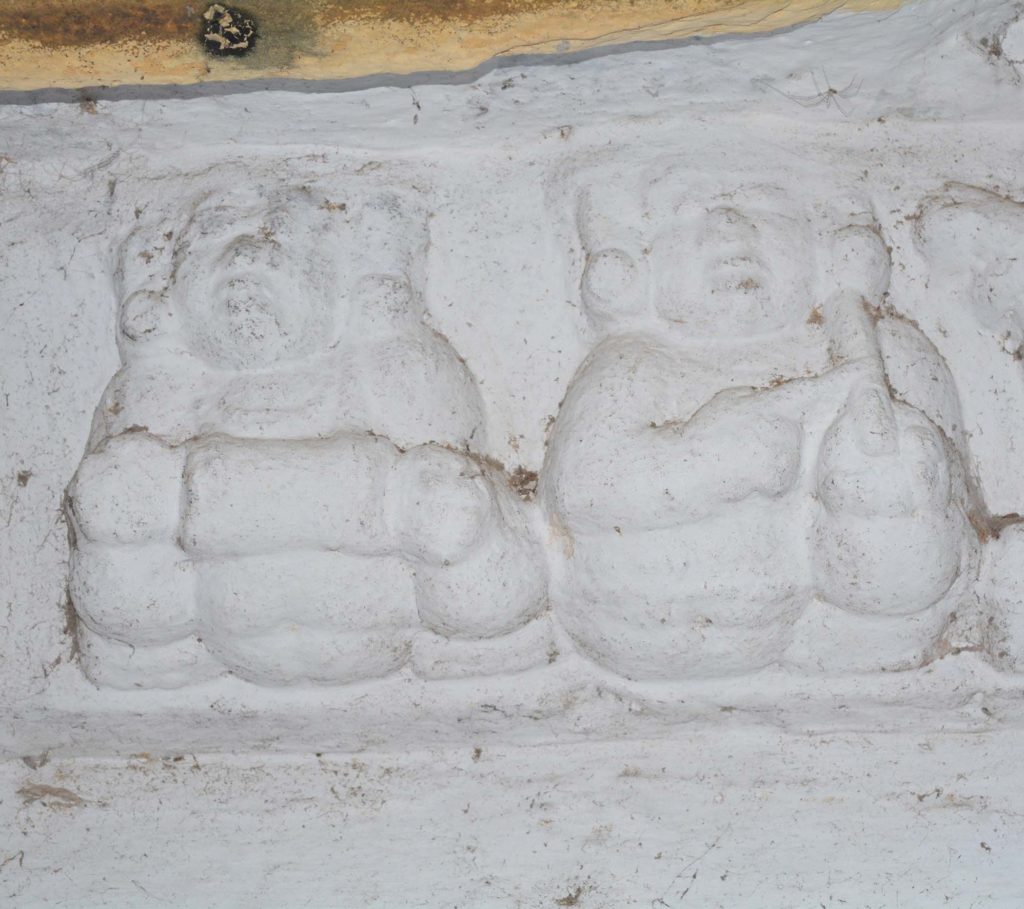
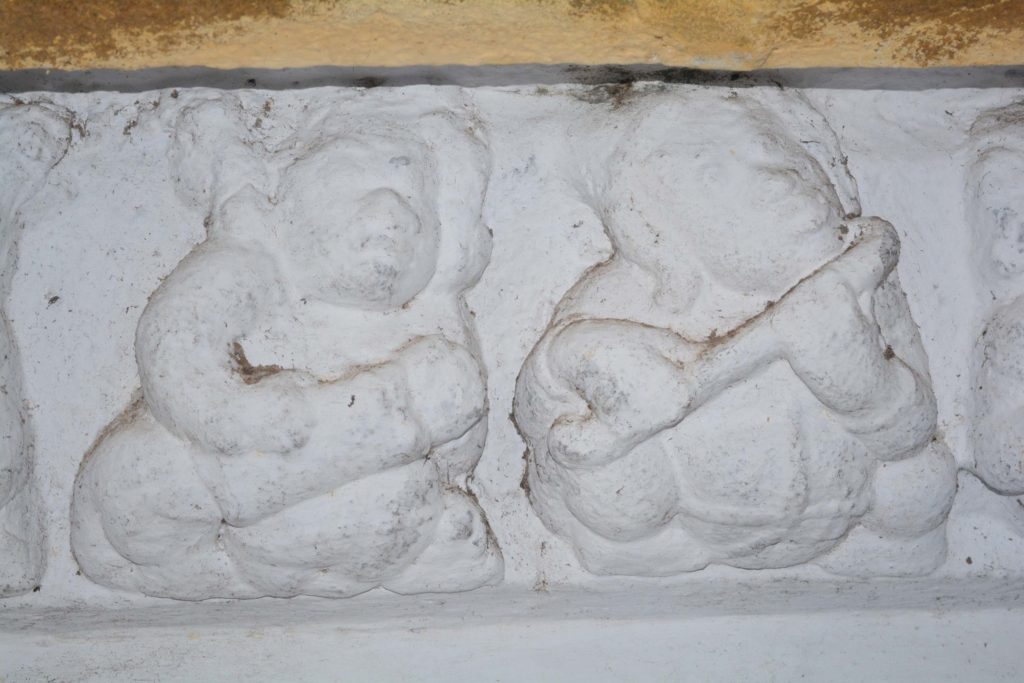
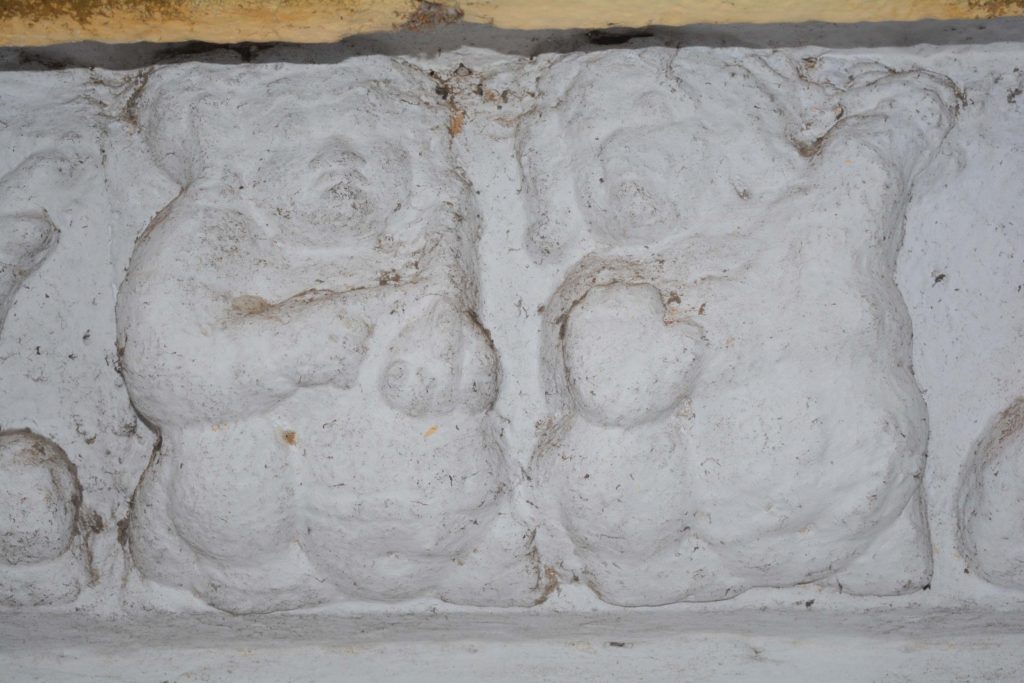
The bhuta frieze is running for both the vimana and the mukha mandapa. It is a remarkable feature picturing the ornaments, dressing, amusements and the performing arts that prevailed in the society. The ganas are depicted in active posture; mostly in dancing gestures or frolicking with the swans, handling instrument, frisking or conversing with the one on the side. Overall the series gives a lively experience, but female ganas or animal faced ganas which are commonly seen in other places are absent here. The corners are decked with animals and gandharva heads. In some of the platforms Nandi is depicted in the usual seated posture. Gana, bull, monkey, lying in relaxed postures with head resting on the floor of the platform are seen at some places.
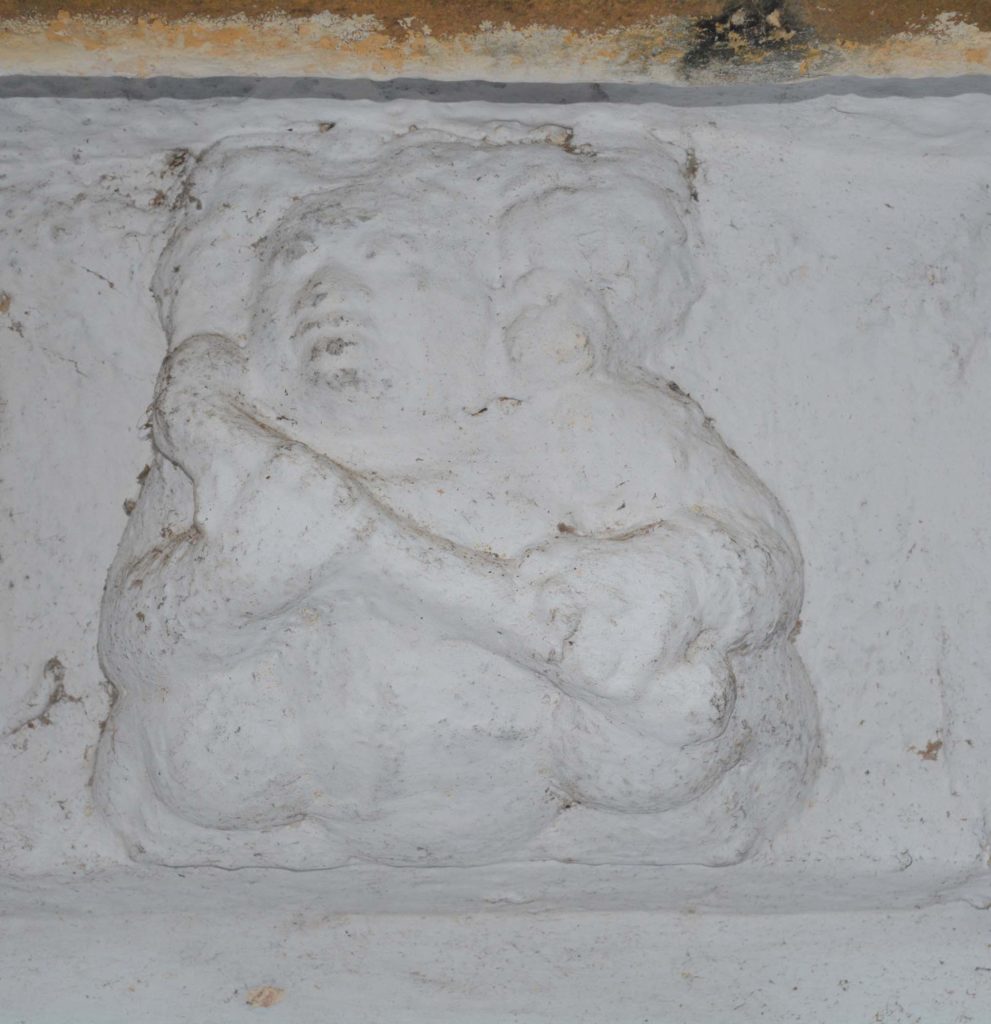

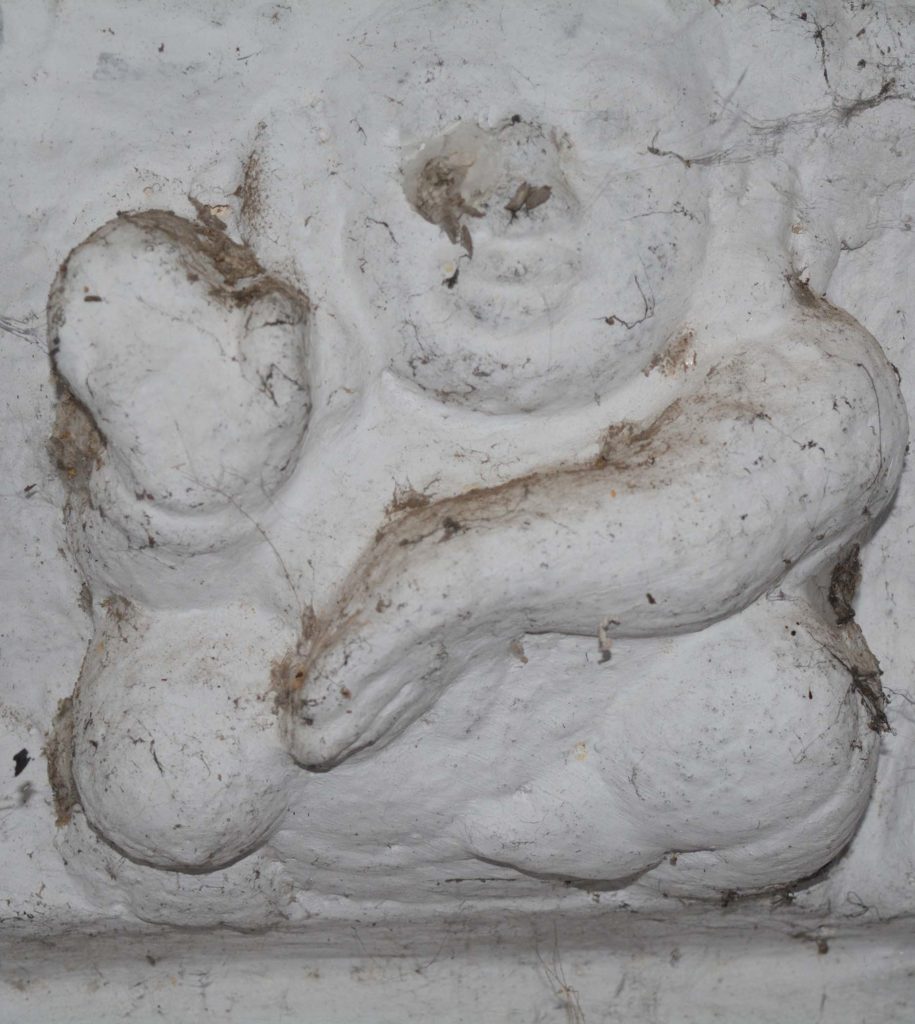
One of the striking feature of the gana frieze in this temple is musical instruments handled by the ganas. Usually cymbal, flute are seen but in Alanthuraiyar temple variety of instruments are seen viz., cymbal of both big and small sizes, flute, cirattaikinnari, yazhl, conch, idakkai, thannumai are frequently shown. The ganas are adorned with short attire and decked with various ornaments. The elongated ears are decked with either pootu kundala or patra kundala and some are seen without any kundalas. The locks are arranged as jatabhara and decked with head ornament, but for some of the ganas simply gathered and knotted. Charapali or beaded mala or chavadi are adorned in the neck; bangles, armlets are the ornaments in the hand. Udarabanda is of different patterns, for most of the ganas it is bow knotted in the belly which looks like vastra udarabanda whereas for some it is like interlocking chains or patterned chains. The yajnopavita is worn in upavita fashion.
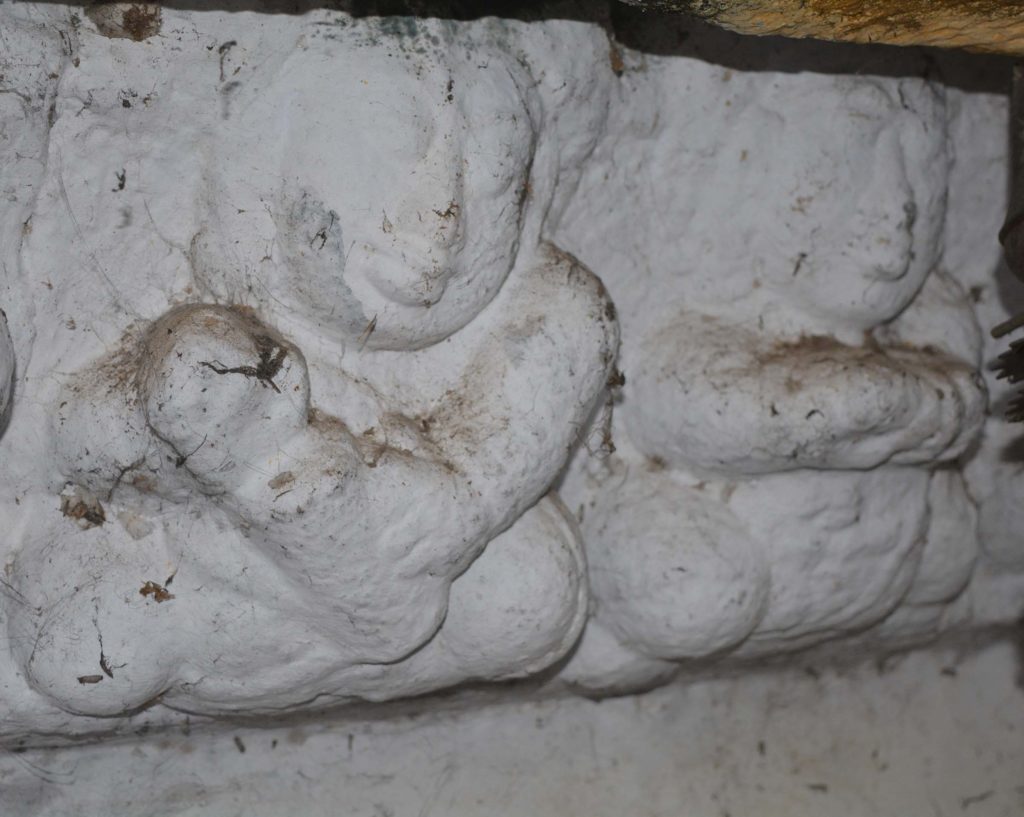
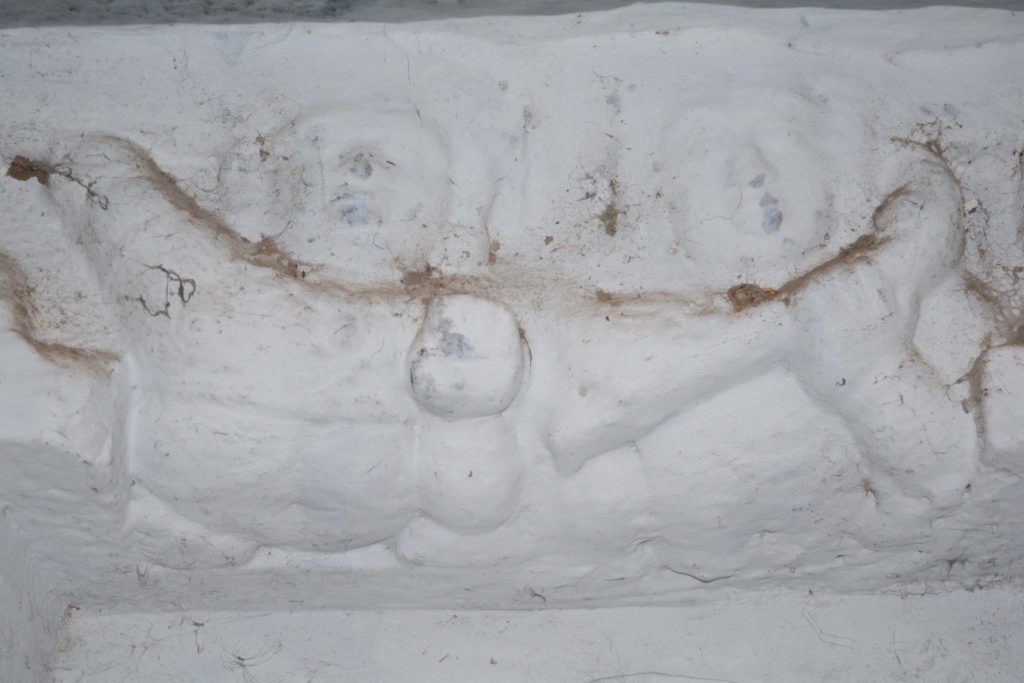
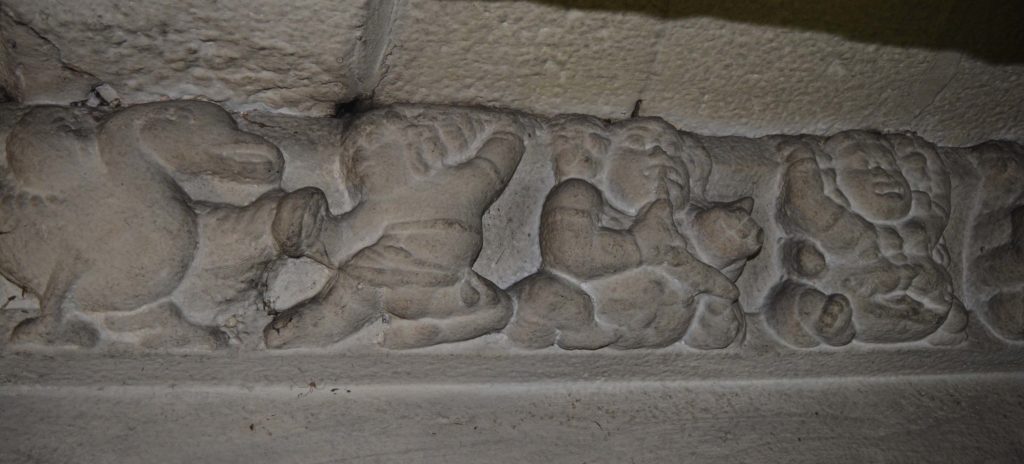
Hands of the ganas are positioned in various ways either raised up or stretched down or folded in half way and showing either a mudra or a hasta. Some of the ganas are seen in gestures like pataka, recita, danda and some are seen with the gestures of kataka, tarjani, vismaya. At some places ganas are paired in gestures. On the northern side a pair is carrying the plank. Instruments like talam, cirattaikinnari, flute, mattalam, idakkai, conch are seen. Both the instrumentalists and the other performers are with their head tilted upward, with vibrant body postures and other gestures show their total involvement in the performance. A kabandaka like gana is shown above the entrance of the mukha mandapa.
INSCRIPTIONS
Seventeen inscriptions are found in this temple complex, copied in the year 1903 by the Archaeological Survey of India and the texts of the inscriptions are published in the South Indian Inscriptions Volume VIII (657-666, 668-673) and Volume III (139). Among the seventeen inscriptions fifteen belong to Cholas and two belong to the Pandyas. Most of the Chola inscriptions are Parakesari inscriptions and also of pre-Rajaraja I period. The Irukkuvel chief Sembian Irukkuvel alias Pudi Parantaka is gleaned in six of the Parakesari inscriptions. In two of the inscriptions Sembian Irukkuvel alias Pudi Parantaka records the construction and consecration of the temple Thiruvalanthurai Mahadevar by him. Besides, he also details about the gift of lands as devadana to the God. For this he applied to the king for the grant of permission to declare the 71/2 veli of lands at Mullikurumbur near Ettarai. The high regnal year Parakesari inscriptions can be considered for Parantaka Chola I however it is quite interesting to note the absence of his epithet. Pudi Madevadigal, the Irukkuvel Princess and wife of Kannaradeva is gleaned through the fifteenth regnal year inscription of certain Parakesari, probably Parantaka Chola I. Besides, queens of Sembian Irukkuvel alias Pudi Parantakan viz., Singan Nimmadigal and Puliyurnattadigal are gleaned through their endowments to Thiruvalanthurai Parameswarar. Among the fifteen inscriptions, the presence of prasastis help us to place two to Rajakesari Rajaraja Chola I and one inscription to Rajendra Chola I.
The inscriptions mention the deity as Thiruvalanthurai Parameswara, Thiruvalanthurai Mahadeva. The Village Anthanallur is mentioned as Anthavanallur in the inscription and the village was under the division of Kiliyur nadu in the early period. During the Middle Chola period the village Anthavanallur of Kiliyur nadu came under the administrative division of Pandikulasani Valanadu. It also gleaned that the village was under the administration of the ‘Urar’. The inscriptions speak about endowment to the deity Thiruvalanthurai Parameswara for worship, food offerings and perpetual lamp. The endowments are in the form of gold, paddy and land. The inscriptions speak about the devadana lands of the deity at Mullikurumbur, Andavanallur, Isanamangalam, Thiruchchendurai, Ettarai etc. Thus, the inscriptions richly gleams the endowments, administration, society and land dealings in the village.