Samayapuram situated 15 km north of Tiruchirappalli city along the Tiruchirappalli-Chennai National Highway is historically associated with Kannanur, the C.E. 13th-century capital of the collateral branch of the Hoysala Empire. Samayapuram stands as Tamil Nadu’s second most visited pilgrimage center after Palani, serving as a major focal point for rural Tamil culture and Mother Goddess worship. Bhojeswara temple lies on the northern side of Samayapuram village and also to the north of the famous Mariamman Temple. The temple is few meters away from the Chennai-Trichy highways and one can reach the temple through Nesavalar Street, Singaravelan Street. To the north of the temple complex is the popular weekly market for goats. Besides the Samayapuram Maariamman Temple, Samayapuram Aathi Maariamman temple, Mukteswara temple, Ujjaini Mahalikudi Makali Amman Temple, Markandeya Temple are the other prominent temples in Samayapuram. In that Mukteswara temple is an ancient temple.
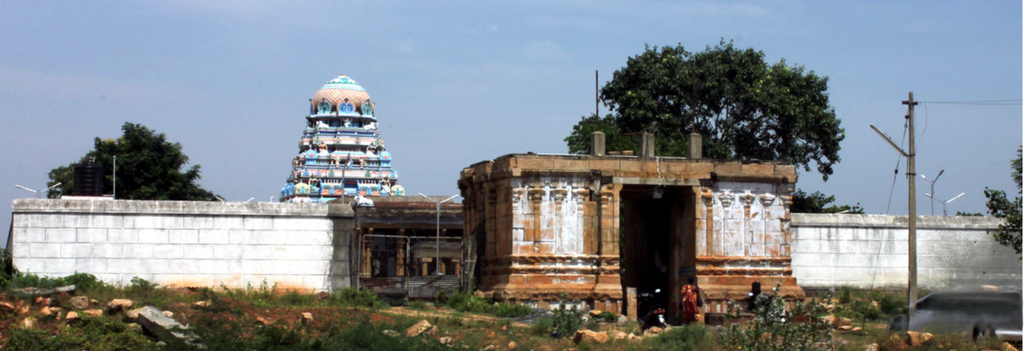
Bhojeswara temple is a spacious two prakara complex. The outer prakara is a plain space encompassed by a newly constructed compound wall. A big temple tank is found on the south-eastern side of the outer prakara. In between the outer prakara compound wall and the inner prakara compound wall a newly constructed iron railing is seen. The outer prakara leads to the inner prakara, it has a single tier gopura on the east. On the south-eastern side of the prakara is seen the madapalli of the temple and Lord Mrityunjaya seated on a mount. On the north-eastern side of the prakara is seen the Navagraha mandapa and chamber to light lamps. On the western side of the prakara is seen the shrines for shrines of Lord Ganesa and Lord Subrahmania. The main shrine lying in the center consists of a vimana, mukha-mandapa, maha-mandapa, and a porch. Lord Chandeswara shrine is on the northern side of the prakara adjacent to the mukha-mandapa. The Goddess Anandavalli shrine is seen on the northern side of the prakara facing south adjoining the maha-mandapa of the main shrine. A nandi mandapa and balitala are seen in front of the main shrine oriented towards the sanctum.
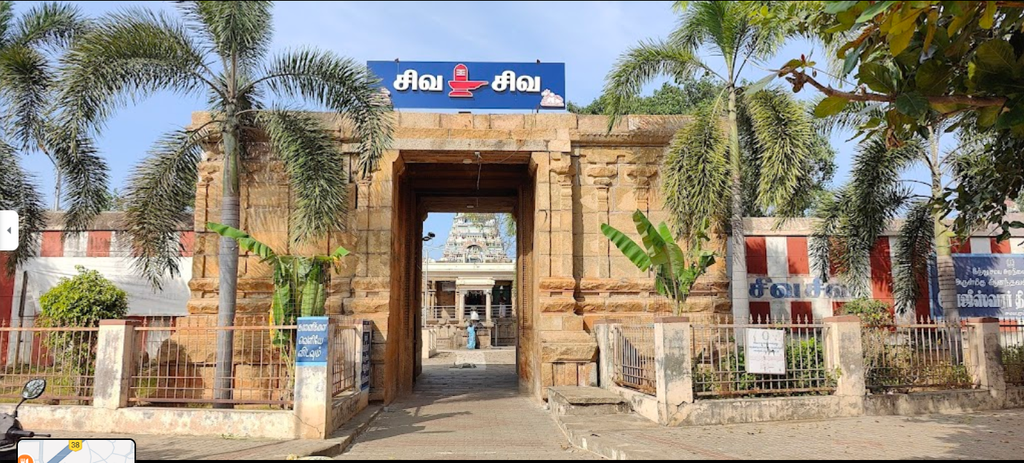
THE GOPURA
The gopura is a single tier stone structure consists only a tala, raised on a upapitha and has adhihsthana, bhitti and prastara. The upapitha is kapota-bandha in type with the components of upana, gala complex and kapota. The gala complex consists of gala, pada flanked by kampas, the long padas are decked with scroll ornamentation. The kapota is decked with kudu arches in correspondence to the padas, in addition, the corners are decked with konapattas. The kudu-arch is decorated with scroll foliage, however the kudu inside is plain. Above the kapota is the upari-kampa on which raise the gopura. The adhishthana of the gopura is padabandha in type with the components of upana, adhava-padma, jagati, rudra kumuda, gala complex and pattika. The bhitti that raise above the adhishthana is cantoned by ten pilasters. The gopura is segmented as karna-panjara-bhadra segments, each segment is cantoned by a pair of pilasters. The bhadra is projected. The pilasters are plain brahmakantha in type with capital ornamentation. Kattu, kalasa, tadi, kumbha, pali, phalaka and virakantha forms the head components. The potikas resting above the pilasters are vettu-taranga in type and bear the uttira. Uttira is followed by vajana and valabhi, the valabhi is decorated as padma series. Kapota is shown at some places and at others remain plain. On either side of the gopura brick wall extend on both sides and encompass the prakara. The gopura leads to the inner prakara.
Continue…