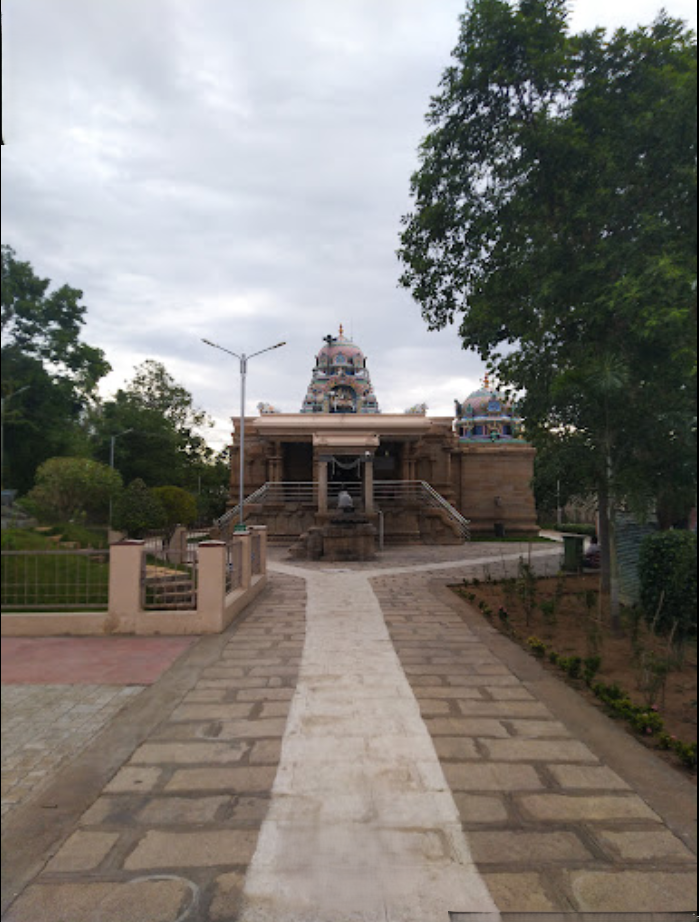
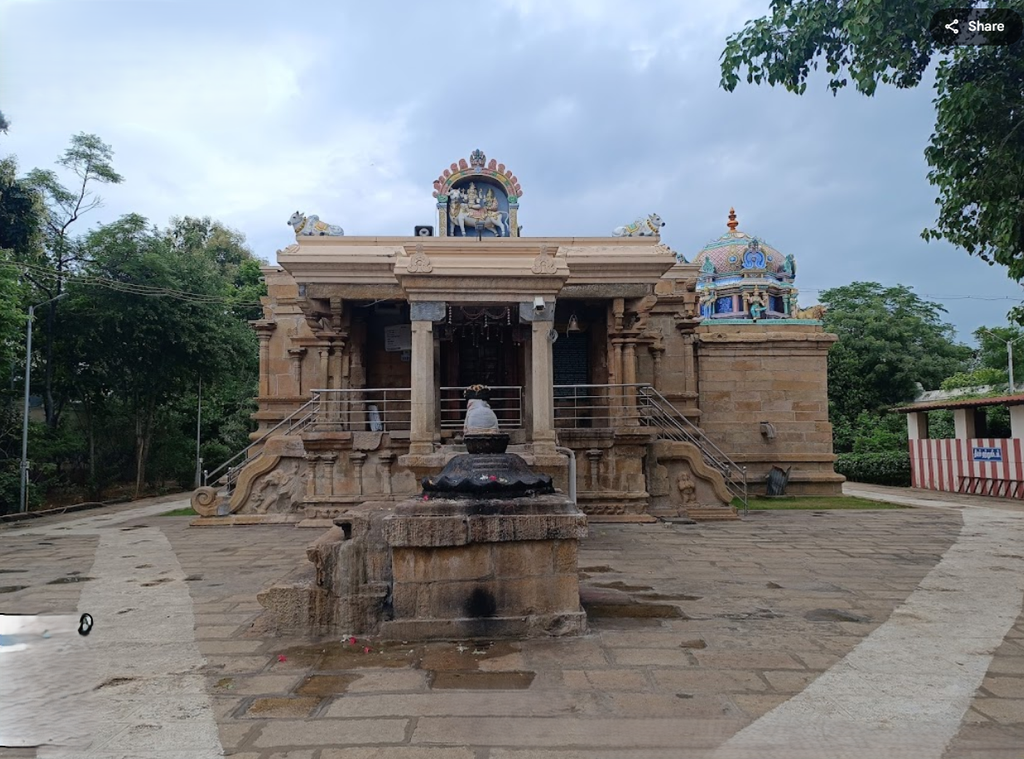
The vimana is a three tala misra vesara vimana raised on a upapitha. The aditala of the vimana is a stone edifice however the superstructure the talas, griva and sikhara are cement work. The upapitha has the components of upo-upana, upana, padmavari, yazhi frieze, gala complex and peruvajana. The gala complex has gala and padas flanked by kampas, the padas are ornamented with scroll foliage.
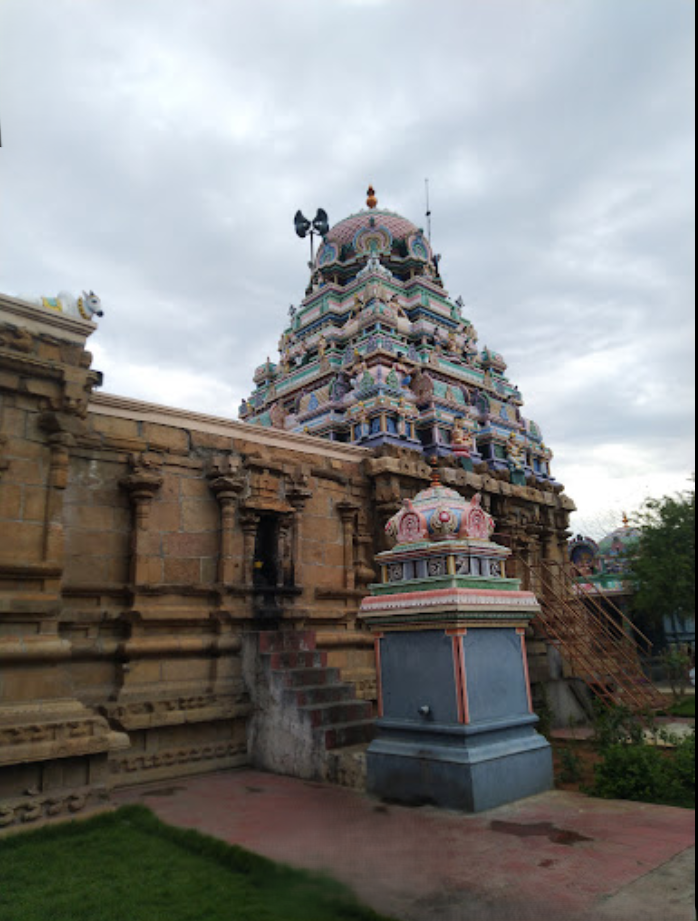
The vimana has adhishthana, bhitti and prastara and segmented as karna paththis in the corners and two bhadra in the middle. All the four segments viz., karna-bhadra-bhadra-karna are projected equally and the space between the segments form a recession and are adorned with koshthas. The middle koshtha that is formed between the bhadra segments are adorned with deities of cardinal directions whereas the koshthas between bhadra and karna segments remain plain. As like, the bhadra segments are decked with panjaras in the middle however, karna segments remain plain.
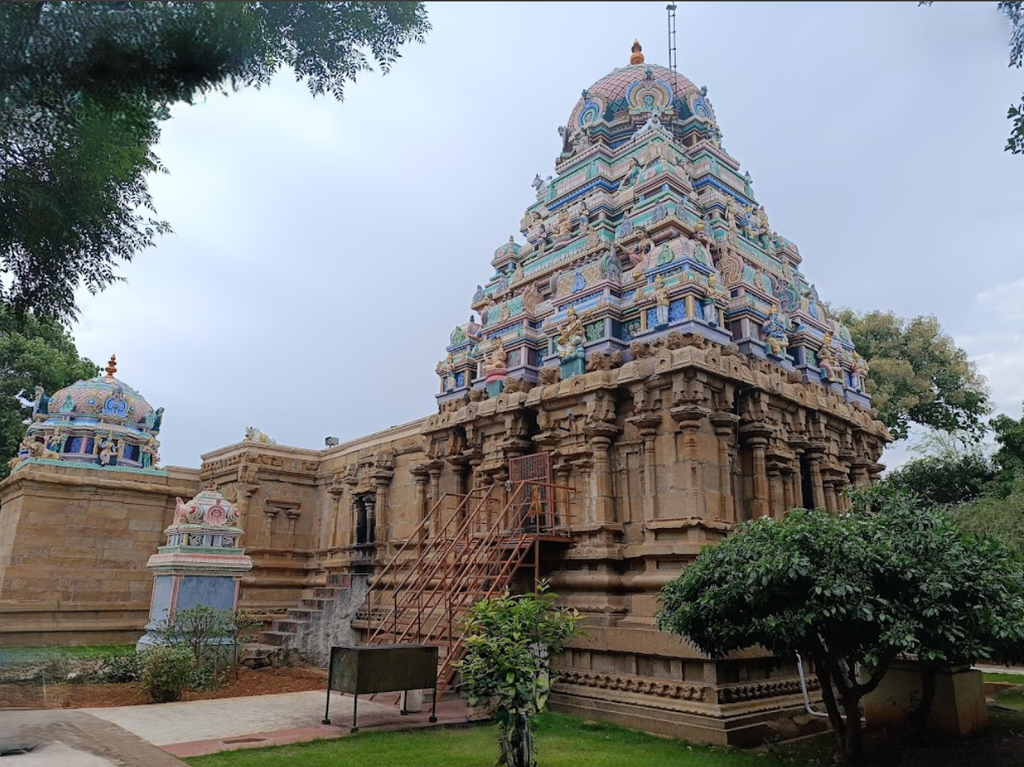
The adhishthana is vargabeda in type; for the karna divisions it is padabandha whereas for the bhadra divisions kapotabandha in type. The padabandha adhishthana has the components of upana embraced by adhava-padma, jagati, rudara-kumuda, gala complex and pattika. Likewise, in the bhadra segment the components of the adhishthana are upana, maha-padma jagati, silambuvari-kumuda, gala complex kapota and bhumidesa. The kapota is decked with kudu arches at frequent intervals, konapattas and the bhumidesa is plain. Above the adhishthana is the vedika complex consists of vedi-gala and vedi-pada flanked by kampas and the vedika proper. The bhitti that raise above the vedika complex is cantoned by pair of pilasters for each paththi divisions. The pilasters both in the karna and bhadra segments are vishnukantha in type and have square base, the vishnukantha shaft has capital components. The square at the base is decked with nagabandhas at the corners. The head components are kattu, kalasam, tadi, kumbha, Padma-pali, phalaka and virakantha. The potikas resting above the pilasters are maddala-nanudal potika with a small bud at the tip, the nanudal is well ornamented as padma. The potikas bear the uttira, uttira is followed by vajana, valabhi and kapota. The valabhi is plain, kapota is decked with kudu-arches in correspondence to the pilasters of the bhitti and konapattas in the middle and corners. The kudu-arches formed out of scroll foliage and the deep kudu formed in the arch remain plain. The tala ends with bhumidesa represented with yazhi frieze at the corners.
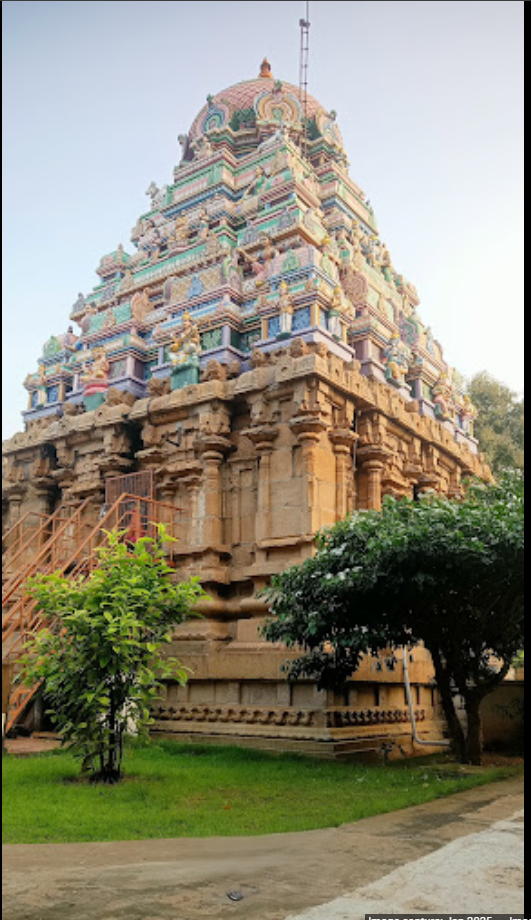
The super structure of the vimana is completely a brick and cement structure. It consists of hara of the aditala, second tala, hara of the second tala, third tala, griva and sikhara. The hara of the aditala consists of karna-kutas in the corners and bhadra-salas for the bhadra segments. The hara elements are shown as full-fledged shrine, it has a common vedika on which rests the tala of the bhadra-sala and karna-kudus. Each hara element is cantoned by a pair of plain brahmakantha pilasters in the bhitti and they directly bear the prastara of the tala. Uttira, vajana, valabhi and kapota forms the prastara of the tala. The kapotas are decked with kudu-arches. Above the tala is shown the griva and shikhara. The hara elements are interconnected by the harantara, but the walls of the harantara remain plain. The hara elements are decked with deities in stucco, Brahma and Saraswathi are shown in the bhadra-salas on northern side, Dakshinamurthi and Rishis in the south, Lord Vishnu and Goddess in the West.
The second tala has karna-bhadra-karna divisions, only the prastara of the second tala is visible, it consists of uttira, vajana, valabhi and kapota. Both male and female bracket figures are shown on all sides to bear the tala. The second tala is crowned with hara. Karnakutas and bhadrasala are shown and are interconnected by harantara. The griva-koshtha of the bhadrasala is decked with cardinal deities. As like the second tala, the third tala is also karna-bhadra-karna segmented and only the prastara of the tala is visible. Both male and female bracket figures are shown bearing the tala.
On the roof of the third tala little inside the vedica complex is seen, above the vedika complex rests the vesara griva and sikhara of the vimana. The griva has uttira, vajana, valabhi and kapota, and decked with koshthas at the cardinal directions and nasikas in the sub-cardinal directions. Lord Umasahita, Lord Brahma, Lord Vishnu, Lord Dakshinamurthi are the deities housed in the koshthas of east, north, west, south respectively. On the roof of the second tala, at the corners a pair of Nandi is shown. The griva is ornamented with geometrical patterns with bloomed lotus at the apex. The metal stupi forms the finial of the vimana.
Continue…